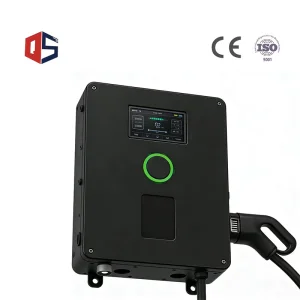
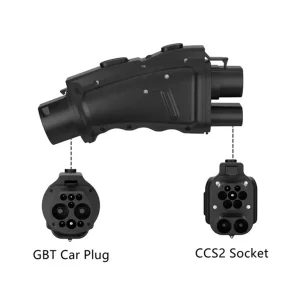
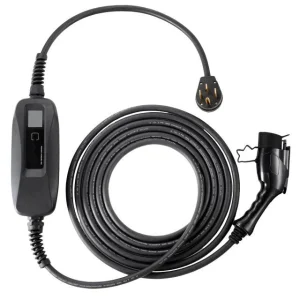
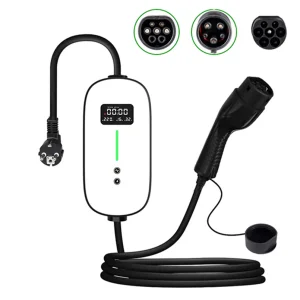
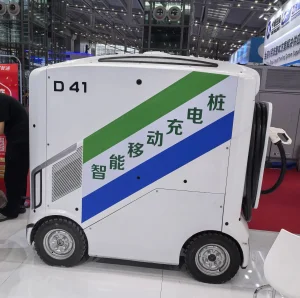
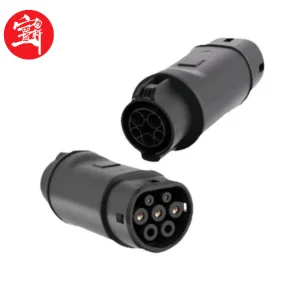
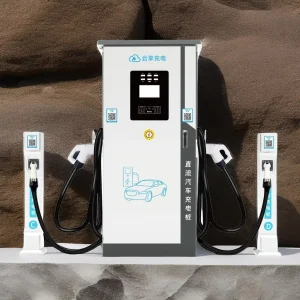
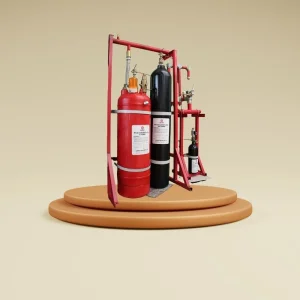
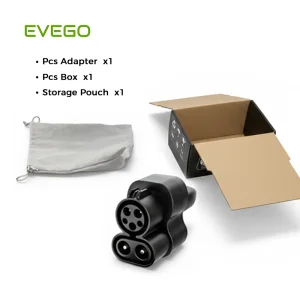
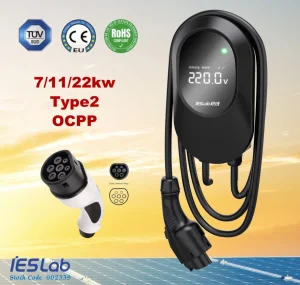
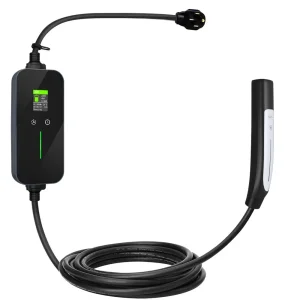
High-performance charging platforms, industrial adapters, and emergency systems certified to global standards.
Hangzhou Volt Charger Co., Ltd. is a leading innovator in the electric vehicle (EV) charging industry, specializing in Portable & DC EV Chargers, EV Charging Adapters, and Smart Energy Solutions. Established in Hangzhou, China, the company has rapidly gained a reputation for delivering high-quality, reliable, and technologically advanced charging products that meet the evolving demands of EV owners and businesses worldwide.
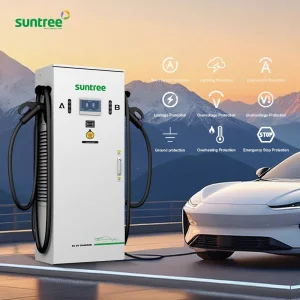
With a commitment to sustainability and innovation, Hangzhou Volt Charger integrates cutting-edge technology into its product portfolio, offering fast, efficient, and safe charging solutions suitable for home, workplace, and public applications. Its portable chargers provide convenience for EV users on the go, while its DC fast chargers ensure rapid energy replenishment for commercial fleets and public charging stations.
The company also develops intelligent charging adapters and energy management systems, enabling seamless connectivity, real-time monitoring, and optimized power usage. By combining robust hardware with smart software, Hangzhou Volt Charger empowers clients to reduce energy costs, enhance charging efficiency, and future-proof their EV infrastructure.
Serving global markets with an emphasis on quality, safety, and customer satisfaction, Hangzhou Volt Charger Co., Ltd. is dedicated to accelerating the adoption of electric mobility and supporting a greener, smarter, and more sustainable transportation ecosystem.

Continuous investment in smart energy topologies enables us to maintain industry-leading standards.
Modern residential and light commercial developments are no longer simple power consumers; they have transformed into complex active nodes within dynamic microgrids. A Home Energy Management System (HEMS) acts as the central intelligence system of this environment. It harmonizes local photovoltaic (PV) generation, battery energy storage systems (BESS), household heat pumps, and electric vehicle supply equipment (EVSE) into a singular, optimized eco-system.
As grid congestion increases and dynamic, time-of-use tariffs become standard across Europe and North America, basic "plug-and-charge" setups are becoming obsolete. Standard hardware must evolve. HEMS implementations leverage real-time power monitoring and predictive artificial intelligence algorithms to forecast local consumption profiles alongside solar generation patterns. By shifting heavy loads—particularly EV charging—to times when electricity prices are low or local PV production peaks, HEMS reduces operational costs while preserving grid stability.

The core components of a CE-compliant HEMS system include smart bi-directional meters, communication gateways (supporting Modbus, CAN bus, EEBUS, and OCPP 1.6J/2.0.1 protocols), and physical load controllers. System reliability hinges on the interoperability of these hardware components.
Through our dedicated R&D cycles in Hangzhou, we engineer hardware nodes that operate stably under complex environmental conditions. From IP55-rated automotive adapters to smart wallboxes with integrated phase-switching mechanisms (allowing automatic switching between 1-phase and 3-phase charging to maximize low solar surpluses), our products deliver robust physical integration pathways for system integrators worldwide.
For import partners and distributors in the European Union, CE certification is not simply a label—it is a legal prerequisite that verifies compliance with strict directives. Home Energy Management Systems and EVSE hardware must comply with multiple overlapping regulatory frameworks:
Without full verification against these standards, installers face significant liability, and system operators risk being disconnected from the distribution network by local utility operators.
A key challenge in HEMS deployment is protocol fragmentation. Inverters use proprietary Modbus maps; EV chargers run on OCPP, and heat pumps rely on proprietary SG-Ready contacts. Hangzhou Volt Charger resolves this through a unified communication gateway. This hardware node translates local peripheral protocols into unified, standard API structures, mitigating localized system failures and simplifying field commissions by up to 40%.
China's Yangtze River Delta is the global hub for power electronics, battery production, and EV charger manufacturing. Hangzhou Volt Charger leverages this unique industrial cluster to secure key competitive advantages for our international partners:
Engineered to support global distribution and local grid configurations.
Engineered with Type A + 6mA DC residual current protection (RCD) built-in. Eliminates the need for expensive external Type B RCDs, reducing installation overheads for contractors.
Real-time phase balancing algorithms monitor overall facility loads, preventing localized blackouts while routing maximum possible power to connected EVSE units.
Native integration with OCPP 1.6J/2.0.1 and OpenADR 2.0b protocols. Facilitates direct connections to virtual power plant (VPP) operators and dynamic grid markets.
Procurement directors at commercial construction companies, fleet operations, and municipal governments must balance upfront capital expenditure with long-term operational resilience. When procuring HEMS nodes and charging hardware, simple desktop verification is insufficient. Field failures can quickly erase the savings from low unit pricing.
For high-value projects, focus procurement verification on the following technical criteria:
Real-world deployments require highly customized solutions based on local infrastructure and regional requirements:
In regions like Scandinavia and Central Europe, energy prices fluctuate hourly based on wholesale spot market rates (e.g., Nord Pool). HEMS devices integrate directly with these price feeds via REST APIs, scheduling EV charging to run automatically when wind or solar power surplus depresses rates, saving consumers up to 60% on charging costs.
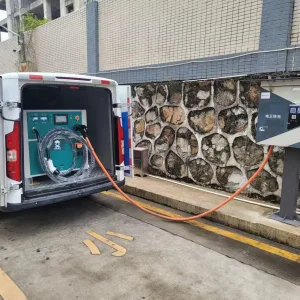
For installations in regions prone to extreme weather and grid blackouts (such as California and Texas), our smart adapters and portable chargers integrate into local microgrids. They facilitate automatic islanding and prioritize emergency backup power for critical home systems, redirecting excess solar generation back to battery systems once the grid drops offline.
Commercial depots require robust energy management to charge delivery vehicles simultaneously without triggering high peak-demand charges. Utilizing our workplace floor-mounted and wallbox chargers with advanced load-limiting controllers, commercial operators can deploy multi-port EV hubs that deliver reliable charging without exceeding utility grid capacity limits.
Technical responses for engineers, procurement directors, and grid compliance specialists.
High-durability accessories, multi-port stations, and robust conversion adapters for international applications.

 Volt Charger