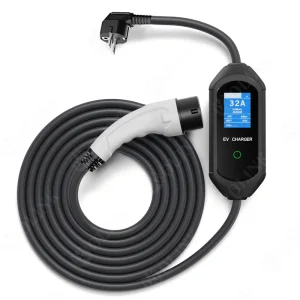
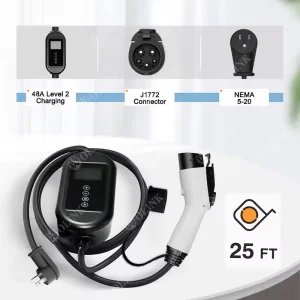
✔
Water Exposure: Ensure the EV charging box is never submerged in water.
✔
Cable Care: Avoid stepping on the cable or subjecting it to excessive bending or knotting.
✔
Impact and Pressure: Protect the EV charging box from impacts and do not place heavy objects on top of it.
✔
Heat Exposure: Do not position the charging cable near objects with high temperatures during charging.
✔
Temperature Range: Operate the device within the prescribed limits, ranging from -30°C to 50°C.
✔
Power Supply: The input cable on the power supply side should have a minimum cross-section of 3*6mm².
✔
Installation: Installation and power distribution should be carried out by qualified professionals.
✔
Charging Connector: Do not insert fingers into the connector when connected to the power supply.
✔
Damaged Cables: Do not use the EV charging box if the cable is damaged.
✔
Designated Use: This box is exclusively designed for EV charging purposes.
Frequently Asked Questions
What is the protection rating for this portable EV charger?
This device features an IP55 protection grade, making it resistant to dust and low-pressure water jets from any direction.
What is the recommended operating temperature range?
The charger is designed to operate safely within a temperature range of -30°C to +50°C.
What type of power supply cable is required for installation?
The input cable on the power supply side should have a minimum cross-section of 3*6mm² to ensure safe and efficient operation.
Can this charger be used for purposes other than EV charging?
No, this EV charging box is exclusively designed and designated for electric vehicle charging purposes only.
How do I start the charging process?
The device supports a Remote Control start mode for convenient operation.
What should I do if the charging cable is bent or knotted?
You should avoid excessive bending or knotting of the cable. If the cable becomes damaged, stop using the EV charging box immediately for safety reasons.
 Volt Charger