The global electric vehicle (EV) sector is undergoing a profound paradigm shift. While traditional plug-in conductive DC fast-charging stations remain the primary infrastructure today, inductive and resonant wireless charging systems are rapidly emerging as the ultimate solution for autonomous, hands-free power replenishment. Driven by the proliferation of autonomous vehicles, robotaxi fleets, and commercial logistics operations, the market demands charging solutions that require zero human intervention.
Currently, the development of wireless charging technology is centered around magnetic resonance coupling, governed globally by the SAE J2954 standard. This protocol ensures interoperability across varying vehicle ground clearance levels (from low-riding sedans to high-clearance SUVs) and output capacities (WPT1 at 3.7 kW up to WPT4 at 22 kW and beyond for heavy-duty transit applications).
To comprehend the differentiation within the EV wireless charging exporter landscape, it is critical to distinguish between traditional close-coupled induction and magnetic resonance coupling. Modern automotive applications rely exclusively on magnetic resonance due to its superior spatial tolerance and high-efficiency rates over larger air gaps.
| Feature Parameter | Electromagnetic Induction (Standard) | Magnetic Resonance Coupling (Advanced) | EV Application Impact |
|---|---|---|---|
| Air Gap Alignment Tolerance | Extremely Narrow (< 10 mm) | Highly Tolerant (up to 150-250 mm) | Allows standard vehicle road clearances |
| Frequency Range | 100 kHz - 200 kHz | 81.38 kHz - 90.00 kHz (SAE Standard) | Avoids high-frequency interference on EV batteries |
| Foreign Object Detection (FOD) | Basic Thermal Sensors | Active Impedance Monitoring & radar | Prevents metallic items from overheating between pads |
| Power Transmission Density | High (Short distances) | Extremely High over large gaps | Enables rapid charging comparable to L2 AC chargers |
Safety protocols represent the single most important differentiator for premium wireless charging manufacturers. A high-quality Ground Assembly (GA) pad integrated into parking spaces must employ advanced FOD systems. If a metallic object (such as a coin or aluminum foil) is deposited on the ground pad during charging, the system will experience an impedance shift. Exporters must provide systems equipped with dual-sensor configurations: radar-based object detection and thermal imaging arrays. Similarly, Living Object Protection (LOP) uses infrared sensors to instantly power down the magnetic loop if a pet walks beneath the vehicle during power transfer.
China's manufacturing ecosystems have achieved global dominance in the EV charging sector, not merely due to labor efficiency, but because of advanced vertical integration of the raw material and electronic components supply chain. Specialized manufacturers like Hangzhou Volt Charger Co., Ltd. utilize these highly refined supply networks to deliver state-of-the-art power electronics components at competitive scales.
As global cities draft new regulations targeting vehicle emissions, wireless charging adoption is diversifying into customized niches. Municipalities and B2B procurement agencies must assess localized infrastructure conditions before selecting an OEM partner.
Enables unmanned fleet hubs to operate continuously. When passenger levels drop, vehicles self-park over Ground Assemblies, eliminating the logistical bottleneck of human plugging operations.
Utilizes dynamic and static wireless loops. Buses recharge at bus stops during passenger embarkation, effectively extending vehicle range without larger, heavy onboard batteries.
Prevents issues with frozen cables, stiff copper connectors, and snow cover. Fully sealed underground transmitting pads operate independently of adverse environmental conditions.
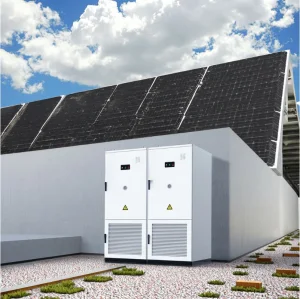
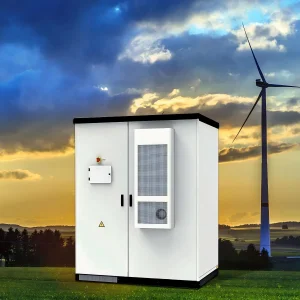
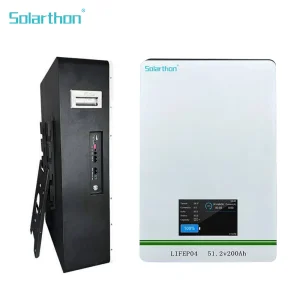
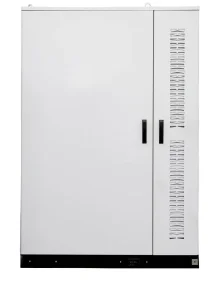
When procuring for commercial workplaces, fleet operators often request unified integrations. Connecting the wireless charging pad to local battery storage cabinets (such as our 100kwh to 500kwh outdoor telecom and energy cabinets) creates a highly resilient microgrid. Power harvested during off-peak hours via distributed photovoltaic systems can feed directly into the wireless transmitter coils during daytime fleet operations, reducing grid peak load penalties.
When searching for top-tier EV wireless charging factories and exporters, global procurement managers must evaluate vendors based on these 10 foundational technological dimensions:
Allows parked EVs to feed power back into the grid wirelessly. This stabilizes smart grids during peak demands without requiring physical cables.
Adapts the magnetic field shape dynamically relative to vehicle height, optimizing power transfer efficiency between WPT1 (sedans) and WPT3 (SUVs).
Ensures minimal heat emission within the sealed underground ground pads. Silicon Carbide semiconductors operate comfortably at up to 85°C.
Uses high-sensitivity loop coils and radar networks to detect debris as small as a paperclip, maintaining safe operating parameters.
Enables efficient charging even if the driver parks up to 20 cm off-center, reducing the need for automated precision parking systems.
A lightweight receiving pad (under 5 kg) ensures that adding wireless charging does not compromise the vehicle's aerodynamic range.
Conforms to ISO 15118-20 standards, enabling secure, encrypted Wi-Fi/DSRC vehicle-to-charger pairing and automated billing.
Scales system architecture from passenger-vehicle standards up to 100 kW+ capabilities for logistics trucks and industrial sweepers.
Utilizes microsegment transmitters embedded beneath highways to charge commercial trucks while traveling at highway speeds.
Features IP69K impact-resistant concrete/composite shell enclosures designed to withstand heavy truck wheel loads up to 15 tons.
Hangzhou Volt Charger Co., Ltd. is a leading innovator in the electric vehicle (EV) charging industry, specializing in Portable & DC EV Chargers, EV Charging Adapters, and Smart Energy Solutions. Established in Hangzhou, China, the company has rapidly gained a reputation for delivering high-quality, reliable, and technologically advanced charging products that meet the evolving demands of EV owners and businesses worldwide.
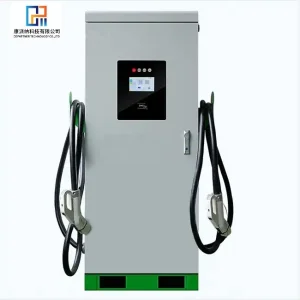
With a commitment to sustainability and innovation, Hangzhou Volt Charger integrates cutting-edge technology into its product portfolio, offering fast, efficient, and safe charging solutions suitable for home, workplace, and public applications. Its portable chargers provide convenience for EV users on the go, while its dc fast chargers ensure rapid energy replenishment for commercial fleets and public charging stations.
The company also develops intelligent charging adapters and energy management systems, enabling seamless connectivity, real-time monitoring, and optimized power usage. By combining robust hardware with smart software, Hangzhou Volt Charger empowers clients to reduce energy costs, enhance charging efficiency, and future-proof their EV infrastructure. Serving global markets with an emphasis on quality, safety, and customer satisfaction, Hangzhou Volt Charger Co., Ltd. is dedicated to accelerating the adoption of electric mobility and supporting a greener, smarter, and more sustainable transportation ecosystem.
Explore technical answers to common queries regarding EV wireless charging procurement, system performance, safety, and infrastructural deployment.
Under SAE J2954 alignment tolerances, modern resonant magnetic wireless chargers achieve a grid-to-battery efficiency of 90% to 93%. This is equivalent to L2 AC conductive charging. The slight efficiency loss of 1% to 2% is attributed to the magnetic coupling gap, but it is heavily offset by the reduction in mechanical wear, maintenance overheads, and weather-related cable failure rates.
Yes, safety compliance is strict. Top manufacturers design transmitters to comply with ICNIRP (International Commission on Non-Ionizing Radiation Protection) guidelines. When the magnetic loop is active, the field is tightly focused between the Ground Assembly and the Vehicle Assembly. If a person or pet approaches, the integrated Living Object Protection (LOP) system automatically shuts off power transfer within milliseconds.
Static charging requires the vehicle to park over a single transmitter pad. Dynamic charging uses a continuous chain of smaller transmitter segments embedded along highways, transferring power while the vehicle is driving. Static wireless charging is currently commercially mature for fleet depots and taxi lines, while dynamic wireless charging is transitioning from proof-of-concept projects to freight corridors.
Yes. OEM adapters and aftermarket receiver kits (consisting of a Vehicle Assembly pad and a rectifier module) can be integrated into the vehicle's high-voltage DC bus. Many commercial fleet managers retrofit older medium-duty delivery vans to work with wireless fleet chargers to reduce wear on charge ports.
Magnetic resonance technology penetrates snow, water, concrete, and asphalt with minimal loss of efficiency. Because ground pads are hermetically sealed (IP67 or IP69K ratings), they operate reliably under extreme weather conditions, unlike exposed electrical plugs which are vulnerable to ice, dirt, and water ingress.
 Volt Charger