

Top China EV Charging Payment Solutions Factories & Suppliers

Driving Intelligent Energy Transactions: Integrating Hardware Reliability, OCPP Compliance, and Advanced Billing Infrastructure for B2B Enterprise Operators Worldwide

Direct Factory High-Performance Hardware Solutions

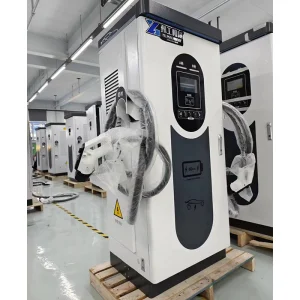
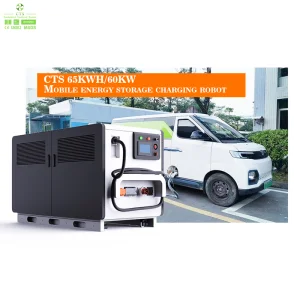
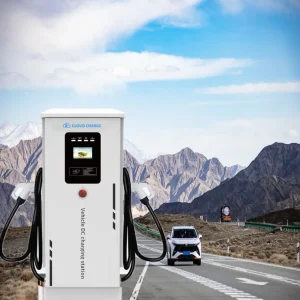
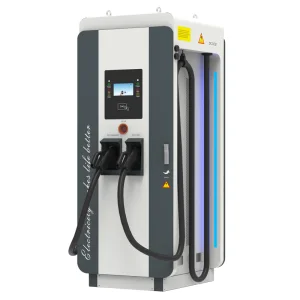
DC Fast EV Charging 65kwh 141kwh 200kwh Support 60kw 120kw CCS1/2 Output Car Battery Charging System

DC Fast EV Charging 65kwh 141kwh 200kwh Support 60kw 120kw CCS1/2 Output Car Battery Charging System

View Technical Details
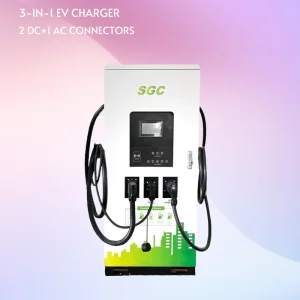
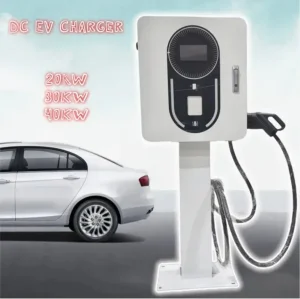
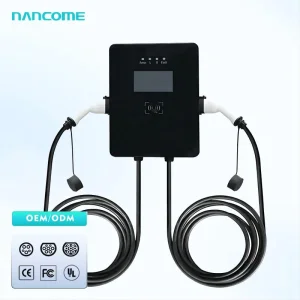
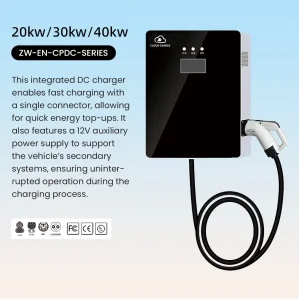
Byd Evs Gbt CCS2 Wall Mounted Commercial Public Home Use 20kw 30kw 40kw Electric Car Vehicle Battery Fast DC EV Charger Charging Solution

Byd Evs Gbt CCS2 Wall Mounted Commercial Public Home Use 20kw 30kw 40kw Electric Car Vehicle Battery Fast DC EV Charger Charging Solution

View Technical Details
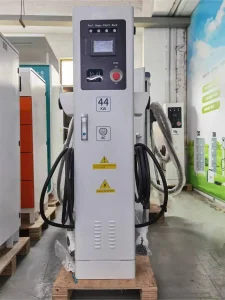
EV Charging Infrastructure for Smart Cities and Public Transport

EV Charging Infrastructure for Smart Cities and Public Transport

View Technical Details
Pipe Network Perfluorohexanone Fire Protection for EV Charging Hubs (5.6MPa)

Pipe Network Perfluorohexanone Fire Protection for EV Charging Hubs (5.6MPa)

View Technical Details
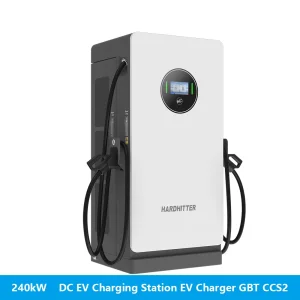
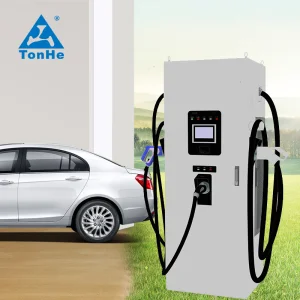
Certified Public Universal Logistics Hubs 60 80 120 160 180 240kw DC EV Electric Vehicle Car Charging Solutions Infrastructure Station Charger for Longtrips

Certified Public Universal Logistics Hubs 60 80 120 160 180 240kw DC EV Electric Vehicle Car Charging Solutions Infrastructure Station Charger for Longtrips

View Technical Details
EV Charger Station Solution 150kw Onboard WiFi Wireless EV Charger Accessories Home Station OEM EV Charger

EV Charger Station Solution 150kw Onboard WiFi Wireless EV Charger Accessories Home Station OEM EV Charger

View Technical Details
New Energy 14kw 22kw AC EV Electric Car Wireless Charger Station

New Energy 14kw 22kw AC EV Electric Car Wireless Charger Station

View Technical Details
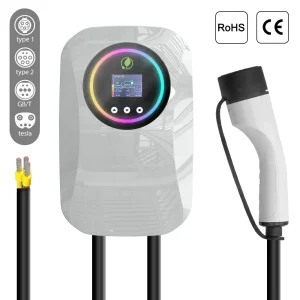
Wall-Mounted Compact Home Use Electric Car Smart Charging Pile Device

Wall-Mounted Compact Home Use Electric Car Smart Charging Pile Device

View Technical Details

As global electric vehicle (EV) penetration rates surge past inflection points, public and commercial charging infrastructure is transitioning from basic utility grid points to highly complex transaction hubs. Standard billing operations have evolved into multifaceted EV charging payment solutions incorporating open communication protocols (such as OCPP 1.6J/2.0.1), real-time secure hardware encryption, bank-grade point-of-sale (POS) terminals, and cloud-driven dynamic pricing schemes. High-performance public sites now require reliable payment processing integrated at the firmware level to ensure maximum uptime, user convenience, and cross-border billing compliance.

99.8%
Firmware Transaction Uptime
OCPP 2.0.1
Standard Protocol Integrated
ISO 15118
Plug & Charge Ready
PCI-DSS
Bank-Grade Compliance

The Global B2B Landscape for EV Charging Payment Architectures

In modern commercial deployment environments, B2B procurement managers face regulatory challenges that dictate how chargers must process financial transactions. In Europe, the Alternative Fuels Infrastructure Regulation (AFIR) mandates that newly installed public fast-chargers of 50 kW and above must feature ad-hoc payment solutions, typically requiring physical credit or debit card readers. Concurrently, in North America, the National Electric Vehicle Infrastructure (NEVI) formula program establishes strict standards regarding credit card reader integration, localized user interfaces, and non-proprietary contact-less payment methods.

To navigate this landscape, B2B operators cannot simply buy stand-alone hardware; they must acquire integrated systems that connect the billing gateway to the charger's backend. The transaction loop typically involves:

  • Physical Payment Terminals: Incorporating EMV Level 1 & 2 readers, contactless NFC modules (supporting Apple Pay, Google Pay, and localized bank cards), and robust PIN pads.
  • On-Board Micro-Controllers & Security: Hardened security modules processing local telemetry, isolated from network environments to prevent skimming and credential intercepts.
  • OCPP Backend Gateways: Standardized communication via JSON over WebSockets, linking terminal transactions directly to CPO (Charge Point Operator) billing platforms like Stripe, Adyen, or localized settlement entities.

Hangzhou Volt Charger Co., Ltd.

Hangzhou Volt Charger Co., Ltd. is a leading innovator in the electric vehicle (EV) charging industry, specializing in Portable & DC EV Chargers, EV Charging Adapters, and Smart Energy Solutions. Established in Hangzhou, China, the company has rapidly gained a reputation for delivering high-quality, reliable, and technologically advanced charging products that meet the evolving demands of EV owners and businesses worldwide.

With a commitment to sustainability and innovation, Hangzhou Volt Charger integrates cutting-edge technology into its product portfolio, offering fast, efficient, and safe charging solutions suitable for home, workplace, and public applications. Its portable chargers provide convenience for EV users on the go, while its DC fast chargers ensure rapid energy replenishment for commercial fleets and public charging stations.
Hangzhou Volt Charger Factory Workshop and Testing Facilities
Smart Energy Management Systems and EV Charging Adapters

The company also develops intelligent charging adapters and energy management systems, enabling seamless connectivity, real-time monitoring, and optimized power usage. By combining robust hardware with smart software, Hangzhou Volt Charger empowers clients to reduce energy costs, enhance charging efficiency, and future-proof their EV infrastructure.

Serving global markets with an emphasis on quality, safety, and customer satisfaction, Hangzhou Volt Charger Co., Ltd. is dedicated to accelerating the adoption of electric mobility and supporting a greener, smarter, and more sustainable transportation ecosystem.

Why Top China Factories Excel in Payment Solutions Integration

Chinese manufacturing is no longer defined by simple hardware replication; it represents the frontier of integrated digital and power electronics supply chains. Factories specializing in EV charging payment solutions leverage massive domestic ecosystems to combine physical sheet metal enclosure fabrication, electrical component sourcing, and advanced software optimization under one roof.

1. End-to-End Vertical Supply Chains

From high-efficiency power modules (using silicon carbide or advanced IGBT technologies) to customized Android-based operating display panels with embedded credit card processing capability, Chinese factories run integrated assembly lines. This reduces time-to-market and minimizes compatibility issues between third-party components.

2. In-House Integration of OCPP & Payment Interfaces

Instead of using rigid proprietary systems, leading suppliers develop open-architecture controllers. This permits direct connection to global payment gateways. They build hardware compatible with major transaction reader manufacturers, enabling buyers to install their preferred payment hardware (e.g., Ingenico, Nayax, or Castles Technology) during factory production.

3. Stringent Testing & Multi-National Compliance

To ensure reliable operations in harsh public environments, factories conduct comprehensive thermal, vibration, moisture-ingress, and electrical protection testing. Their units are built to achieve certifications such as CE, RoHS, UKCA, TUV, and UL, guaranteeing that B2B operators comply with safety directives across Europe, North America, and the Asia-Pacific region.

Feature Proprietary Billing Systems Open OCPP Factory Payment Solutions
Integration Versatility Locked to specific CPO cloud software, high migration costs. Universal OCPP 1.6J/2.0.1; runs on any standard backend platform.
Hardware Vendor Choice Requires purchasing specific models from exclusive suppliers. Compatible with diverse readers (Nayax, Ingenico, Valina, Payter).
Regulatory Adherence Inconsistent compliance with new directives like AFIR or NEVI. Built-in compliance with ad-hoc credit card payments and clear pricing screens.
Maintenance Cost High renewal fees for closed APIs and proprietary software licenses. Low-overhead local integration; open telemetry data interfaces.

Localized Application Scenarios for B2B Charge Point Operators

Depending on the target deployment model, payment system configurations vary significantly. Below are the primary deployment scenarios where optimized factory integrations demonstrate high performance:

A. Highway Hubs & Ultra-Fast Public Corridors

These installations call for high-output chargers (150kW-240kW and above) where drivers demand fast energy transfer and minimal transaction friction. Integrating direct contactless credit card readers and dynamic LCD screens display the pricing structure in real-time, allowing ad-hoc users to pay quickly without downloading mobile apps.

B. Smart Cities, Public Transit, and Municipal Parking

In high-density municipal structures, charging infrastructure connects to smart grid platforms. The payment systems here support RFID loyalty cards, municipal transit integration, and virtual QR-code payment options. Built-in Wi-Fi and 4G modules ensure consistent communication with centralized management servers, reducing transaction failures.

C. Fleet Depots, Logistics Hubs, and Warehouse Operations

Unlike public charging, commercial fleet hubs (supporting delivery trucks, electric buses, and corporate fleets) prioritize closed-loop authorization. Drivers access charging via encrypted company RFID keyfobs or direct Plug & Charge (ISO 15118) vehicle-to-charger handshakes. Software-based billing platforms log electricity consumption per vehicle to simplify internal accounting and carbon footprint reporting.

Emerging Trends in EV Transaction Ecosystems

The EV charging landscape is transforming rapidly. Several key architectural trends are shifting from R&D laboratories into volume factory production:
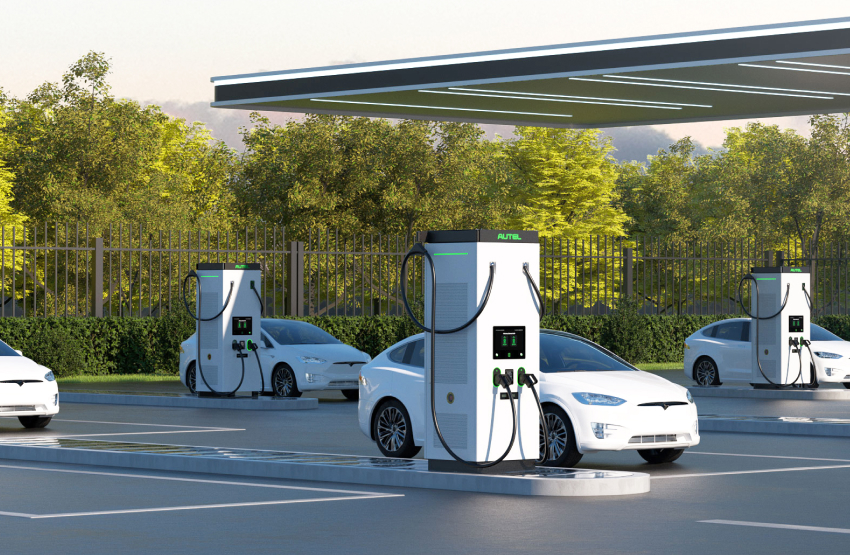
  • Plug & Charge (ISO 15118): Automating the entire payment loop by establishing an encrypted connection between the EV's onboard computer and the charging station's telemetry, removing the need for manual cards or apps.
  • Dynamic Pricing Algorithms: Adjusting pricing automatically based on real-time grid load, localized peak hours, and solar generation availability to optimize operating margins.
  • Vehicle-to-Grid (V2G) Payment Settlement: Transforming charging points into bidirectional nodes. Future payment systems must handle refund settlements when an EV feeds power back into the microgrid.

Comprehensive FAQ: Strategic Insights for B2B Sourcing Managers

How do China EV charging factories ensure payment terminals comply with EU AFIR regulations? +
Top Chinese factories integrate certified hardware payment terminals (such as those from Payter, Ingenico, and Nayax) directly into the charger casing during assembly. The firmware supports Open Charge Point Protocol (OCPP 1.6J/2.0.1) and handles payment processing independently or through the CPO’s back office. This ensures ad-hoc payment compliance (credit card readers, PIN pads, and clear tariff structures on-screen) as mandated by AFIR directives.
Can we customize the user interface (UI) and integration APIs for our company branding? +
Yes. Leading factories provide comprehensive OEM/ODM services. This includes physical custom branding, color matching, and custom screen layouts, as well as customized OCPP configurations. Operators can direct the charger’s connection to their proprietary platform, configure custom transaction screens, and manage local payment systems using the factory’s API documentation.
What fallback mechanisms protect transactions during communication or internet outages? +
High-performance chargers feature local non-volatile offline memory databases. If network connectivity (via 4G, Ethernet, or Wi-Fi) is lost, the charger stores transaction logs, user RFID credentials, and local authorization lists. Once connectivity is restored, the charger transmits these logs to the OCPP backend, preventing lost billing records and minimizing user downtime.
How do you handle security updates and PCI-DSS compliance? +
Payment transactions are isolated from the charger’s primary control board. The payment reader interacts directly with payment gateways via encrypted SSL/TLS channels. We run secure Linux-based system controllers that support Over-The-Air (OTA) firmware updates, letting you patch security vulnerabilities without needing on-site maintenance.
What is the standard delivery timeline for bulk customized B2B charging hardware? +
For standard OEM production batches, delivery schedules range between 4 to 6 weeks. Customized hardware orders involving specialized credit card integrations, non-standard paint finishes, or custom electrical configurations may require 6 to 8 weeks to allow for comprehensive testing and validation before dispatch.

Advanced Commercial & Infrastructure Systems

40kw-240kw High-Traffic EV Public Charging Infrastructure 250A Car Charging Station High-Speed EV Chargers Public Parking Ocpp

40kw-240kw High-Traffic EV Public Charging Infrastructure 250A Car Charging Station High-Speed EV Chargers Public Parking Ocpp

View Technical Details
High Quality Public Multi-Bay Wallbox 20 30 40kw DC EV Electric Vehicle Car Charging Solutions Infrastructure Station Charger for Longtrips

High Quality Public Multi-Bay Wallbox 20 30 40kw DC EV Electric Vehicle Car Charging Solutions Infrastructure Station Charger for Longtrips

View Technical Details
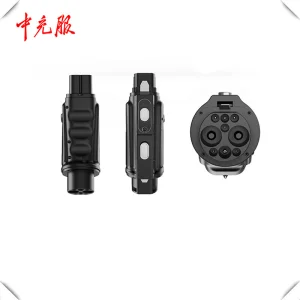
Zhongchongfu CCS2-Gbt Adapter Fast Global Fleet EV Charging Solution with Small Size Robust Electrical Insulation and Easy Handling Cross Standard Efficiency

Zhongchongfu CCS2-Gbt Adapter Fast Global Fleet EV Charging Solution with Small Size Robust Electrical Insulation and Easy Handling Cross Standard Efficiency

View Technical Details
Portable EV Battery Charger Gbt Type2 3.5kw 16A AC Level 2 for on-The-Go Charging

Portable EV Battery Charger Gbt Type2 3.5kw 16A AC Level 2 for on-The-Go Charging

View Technical Details
Compact Portable Mobile Emergency Electric Car Charging Pile Device

Compact Portable Mobile Emergency Electric Car Charging Pile Device

View Technical Details
Flexible Multi-Standard 180kw EV Car Charger Charging Station for Public Stations, Fleet Depots, and Commercial Parking Facilities

Flexible Multi-Standard 180kw EV Car Charger Charging Station for Public Stations, Fleet Depots, and Commercial Parking Facilities

View Technical Details
Floor-Mounted AC Charger 22kw 11kw Dual Type1 Port Type2 Charging Guns Grid-Connected Charger Public EV Charging Infrastructure

Floor-Mounted AC Charger 22kw 11kw Dual Type1 Port Type2 Charging Guns Grid-Connected Charger Public EV Charging Infrastructure

View Technical Details
22kw Type2 EV Charger Wallbox 3-Phase Commercial Charging Station for EV Fleet & Public Operation

22kw Type2 EV Charger Wallbox 3-Phase Commercial Charging Station for EV Fleet & Public Operation

View Technical Details