As electric vehicles (EVs) gain popularity, understanding charging efficiency is vital. The question, "Why do some EV chargers charge slower than others?" is essential for consumers and industry experts alike. Research shows that over 40% of EV owners experience frustration with charging speeds. This can lead to anxiety about long-distance travel and everyday usability.
Various factors contribute to the disparity in charging rates. Charging station types, power outputs, and connection standards all play critical roles. For instance, Level 1 chargers deliver 2-5 miles of range per hour, while Level 3 (DC fast chargers) can provide up to 100 miles in just 30 minutes. However, not all locations have access to these faster chargers.
Additionally, charging time is also affected by vehicle battery management systems, temperature conditions, and cable quality. As many as 30% of users overlook these elements. Consumers need to be aware of how their choices impact charging efficiency. Understanding these differences can help EV owners make informed decisions, reducing frustration and enhancing their EV experience.
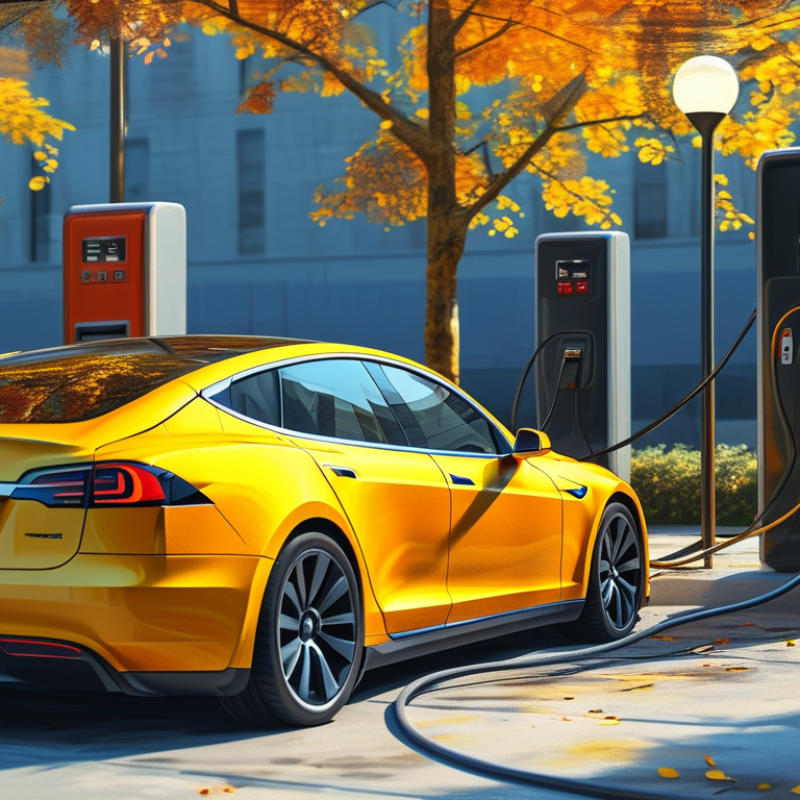
When charging electric vehicles (EVs), speed isn't the same across the board. Several factors play a role in how quickly an EV charges. One primary factor is the charger type. Level 1 chargers are slower; they provide basic household current. Level 2 chargers are more common in public spaces and offer faster charging capabilities. However, fast chargers, like DC fast chargers, can significantly reduce charging time. Not all chargers are created equal.
Another crucial factor is the battery capacity of the EV itself. Larger batteries may take longer to charge, even with a high-speed charger. Additionally, the state of the battery also matters. A battery with a low level of charge will accept power at a different rate than one that is nearly full. Temperature affects charging speed too. Batteries charge slower in extreme temperatures.
Charger location impacts access and speed, as well. Some environments may have limited power supply, affecting the overall charging efficiency. It's worth considering that the EV charging infrastructure is still evolving. As technology advances, we may see more uniformity in charging speeds. Despite the progress, users may often find themselves frustrated with slower options. This highlights the need for better educational resources and clearer expectations for EV users.
Electric vehicle (EV) chargers come in various types, each with different charging rates. These classifications are essential for understanding why some chargers are faster than others. The primary types include Level 1, Level 2, and DC fast chargers.
Level 1 chargers are your basic home outlet chargers. They provide about 1.4 kW and can take over 12 hours to fully charge an EV. This slow rate may not be practical for daily use. Many users find this frustrating, especially when they need a quick top-up.
On the other hand, Level 2 chargers offer faster rates of around 3.3 to 19.2 kW. Found in homes and public stations, they can recharge an EV in a matter of hours. DC fast chargers are the quickest, providing 50 kW or more. Still, access to these chargers can be limited. Not every charger is universally compatible, leading to confusion. Understanding these differences will help EV owners make informed choices for their charging needs.
| Charger Type | Charging Rate (kW) | Charging Time (for 60 kWh Battery) | Common Use Cases |
|---|---|---|---|
| Level 1 Charger | 1.4 - 2.4 kW | 30+ hours | Home Charging |
| Level 2 Charger | 3.7 - 22 kW | 4 - 8 hours | Public Charging, Home Charging |
| DC Fast Charger | 50 - 350 kW | 30 min - 1 hour | Highway Charging Stations |
| Tesla Supercharger | 120 - 250 kW | 15 - 30 min | Long-Distance Travel |
When it comes to electric vehicle (EV) charging, the infrastructure plays a crucial role in determining the charging speed. A report by the U.S. Department of Energy highlights that not all EV chargers deliver the same performance. The main factors influencing charging speed include the power output of the charger and the capability of the electrical grid.
Many public chargers fall into the level 2 category, operating at 240 volts with an output between 3.3 kW to 19.2 kW. In contrast, DC fast chargers can provide power between 50 kW to 350 kW. This significant difference creates a noticeable gap in charging times. Some chargers struggle to deliver optimal power due to outdated wiring or limitations of the local electrical grid.
Electric vehicle owners should consider their charging environment. Installations in urban areas may benefit from newer infrastructure, promoting faster charging capabilities. Conversely, rural areas might experience slower speeds due to older systems.
Tips for users: Always check the power output before using a charger. Find locations with fast charging stations when possible. Optimize your charging schedule based on the time of day; electricity demand usually decreases overnight.
When it comes to electric vehicle (EV) charging, compatibility between the vehicle and the charger plays a crucial role. Many drivers may not realize that the charging speed can vary significantly depending on the specific make and model of their car. According to the International Energy Agency (IEA), different EV models support various charging standards. For instance, some vehicles may only accept Level 2 charging, which delivers up to 240 volts, while others can handle DC fast charging at levels exceeding 400 volts. This discrepancy often leads to slower charging times for certain EVs.
Charger output is another factor that impacts compatibility. A charger rated at 7 kW may charge an EV much slower than one rated at 50 kW, depending on the vehicle's onboard charging capabilities. Research from the U.S. Department of Energy indicates that many entry-level EVs come with onboard chargers limited to 3.3 kW or 6.6 kW. As a result, even if a high-capacity charger is available, drivers might still experience slower charging rates.
Furthermore, terrain and battery state can also affect charging performance. For example, a battery that is almost full will charge more slowly as it approaches its limit. This can lead to misunderstandings about the charger's efficiency. Not all chargers are created equal, and user experiences can vary widely. These nuances can be frustrating but are essential in understanding EV charging dynamics.
Environmental conditions play a crucial role in the performance of electric vehicle (EV) chargers. Temperature extremes can significantly affect charging efficiency. A recent study indicated that charging speeds can drop by up to 30% in cold weather. This is due to the lithium-ion batteries’ chemical reactions slowing down in low temperatures. In contrast, very high temperatures can also pose challenges, with overheating potentially leading to reduced charging rates or even permanent battery damage.
Humidity levels can further complicate the charging process. High humidity can cause condensation inside charging ports, leading to short circuits. According to a report by the International Energy Agency, over 25% of EV owners have faced charging issues in high humidity areas. Ideal conditions for charging are typically found in moderate temperatures and controlled environments. Yet, many charging stations are located outdoors, exposing them to the elements.
The location of a charger also matters. Urban areas may experience more electromagnetic interference, impacting charging efficiency. Furthermore, the infrastructure of the local grid can also introduce variability in charging rates. Inadequate grid capacity can limit the power available to chargers. These inconsistencies highlight the need for better infrastructure planning and environmental considerations in future EV charging solutions.
: The primary types are Level 1, Level 2, and DC fast chargers. Each type varies in charging speed.
Level 1 chargers can take over 12 hours to fully charge an EV. This slow speed is often impractical for daily use.
Level 2 chargers provide between 3.3 kW to 19.2 kW. They can recharge an EV in a matter of hours.
DC fast chargers provide 50 kW or more. They are the quickest option but may be less accessible in some areas.
The electrical infrastructure affects charging speeds. Not all chargers deliver the same performance due to grid limitations.
Owners should consider local infrastructure. Urban areas often have newer systems leading to faster charging rates.
Users should check charger power output and find locations with fast chargers. Charging overnight is often more efficient.
Some chargers may not be universally compatible. Users may experience confusion regarding which type to use.
Rural locations often have outdated wiring and older systems, leading to slower charging speeds.
Many users find that Level 1 charging is frustratingly slow, especially when needing a quick boost.
The question of "Why some EV chargers charge slower than others" can be attributed to several key factors. Firstly, the type of charger significantly influences charging rates, with varying levels of power output among standard Level 1, Level 2, and DC fast chargers. Additionally, the electrical infrastructure supporting these chargers plays a crucial role; limitations in available voltage or amperage can hinder performance.
Furthermore, compatibility between the vehicle and charger is essential for optimal charging efficiency, as some vehicles can only accept lower charging rates. Lastly, environmental conditions such as temperature and humidity can impact the overall effectiveness of the charging process. Understanding these factors provides insight into the variable charging speeds experienced by electric vehicle users.

Volt Charger