Electric vehicles (EVs) are gaining popularity quickly. As more people adopt this technology, the demand for charging stations increases. However, many EV owners wonder, "Why do some EV chargers charge slower than others?" This question is crucial for optimizing charging time and improving convenience.
The speed of an EV charger depends on various factors. Charging levels, equipment quality, and energy supply influence performance. Level 1 chargers, for instance, are often found in households. They provide slower charging speeds. Level 2 and DC fast chargers, however, deliver quicker energy boosts. Understanding these differences can help users choose the right charger for their needs.
Moreover, the energy source affects charging rates. Some stations may have a limited power supply. This can lead to slower charging, even with advanced equipment. It's essential to evaluate charging options before relying on them for long journeys. Reflecting on charger performance can lead to better planning and improved EV ownership experiences.
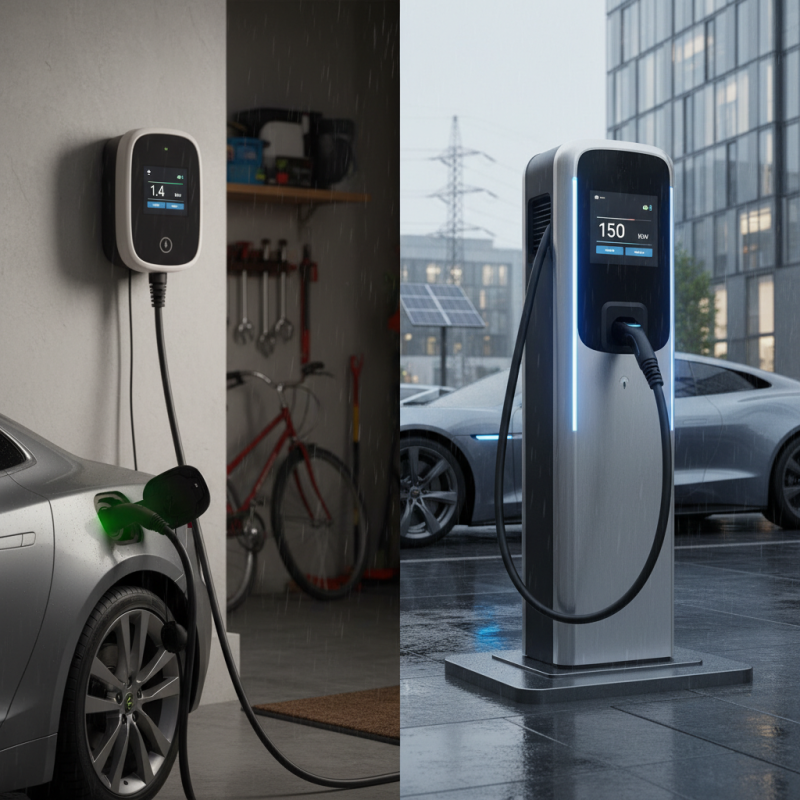
Factors Influencing Charging Speed of Electric Vehicle Chargers
The charging speed of electric vehicle (EV) chargers varies significantly based on multiple factors. One major influence is the power output of the charger itself. For instance, Level 1 chargers deliver around 1.4 kW, which is quite slow, while Level 2 chargers can provide up to 19.2 kW. This disparity leads to varying charge times, with a full charge on a Level 1 charger taking over 24 hours for some EVs. In contrast, Level 2 chargers can do the same in about 4 to 8 hours, depending on the vehicle’s battery capacity.
Another critical factor is the state of the vehicle's battery management system. Advanced systems can optimize charging efficiency, ensuring the battery receives power faster while monitoring its health. According to the International Energy Agency’s report from 2022, EVs with improved thermal management can charge 50% quicker than those without. Additionally, ambient temperature plays a role; cold weather can slow charging rates by as much as 30%, as batteries require ideal conditions to operate effectively.
Infrastructure also matters. The availability of high-voltage charging stations impacts the experience significantly. According to research by the Electric Power Research Institute, charging networks with upgraded compatibility can nearly double the charging speeds. Issues like connectivity and location can hinder access, raising questions about usability and reliability. EV owners need to consider these elements to maximize their charging experience.
Why Do Some EV Chargers Charge Slower Than Others? - Factors Influencing Charging Speed of Electric Vehicle Chargers
| Charger Type |
Charging Speed (kW) |
Voltage (V) |
Connector Type |
Typical Use Case |
| Level 1 Charger |
1.2 - 2.4 |
120 |
NEMA 5-15 |
Home Charging |
| Level 2 Charger |
3.7 - 22 |
240 |
J1772 |
Public Charging Stations |
| DC Fast Charger |
50 - 350 |
400+ |
CCS, CHAdeMO |
Highway Travel |
| Wireless Charger |
3 - 11 |
N/A |
Inductive |
Convenient Parking |
Types of EV Chargers: Level 1, Level 2, and DC Fast Charging
When it comes to electric vehicle (EV) charging, understanding the types of chargers is essential.
Level 1 chargers provide the slowest charging speed. They typically use a standard household outlet, delivering around 5 miles of range per hour of charging.
This means an overnight charge could give you about 40 miles of range, making it ideal for short commutes.
Level 2 chargers are much quicker. They use a 240-volt outlet, allowing for charging speeds of 10 to 60 miles of range per hour.
This can be crucial for daily drivers who need a quick top-up during the day. Many public charging stations opt for Level 2 since they balance speed with accessibility.
However, installation can be costly and may require electrical upgrades in some homes.
DC Fast Charging stands at the top of the charging hierarchy. These chargers can provide up to 80% charge in as little as 30 minutes.
Though incredibly efficient, they are often found in commercial areas. Not all EVs are compatible with DC fast chargers, leading to confusion.
It’s important to know your vehicle’s charging capabilities before you set out. Choosing the right charger depends on your daily habits and needs.
Impact of Charger Power Output on Charging Duration
Charging an electric vehicle (EV) isn't always a straightforward process. The power output of the charger significantly affects how long it takes to charge your vehicle. Chargers come in various types, and the speed of charging can vary widely. Level 1 chargers typically offer around 2-5 kW, while Level 2 can provide 7-22 kW. Fast chargers, often designated as Level 3, can go up to 150 kW or more. This difference in output results in varying charging durations.
For example, a Level 1 charger may take an entire night to fully replenish a car's battery. In contrast, a Level 3 charger can achieve a similar task in under an hour. This disparity is crucial for EV owners, especially those on tight schedules or long journeys. However, not all locations offer fast chargers. Accessibility can limit your options.
It’s also important to consider that not all vehicles can handle high-output chargers. Compatibility issues may arise. If a vehicle only supports Level 2 charging, using a Level 3 charger won't speed things up; the vehicle will only draw what it can handle. This can lead to frustration for those expecting rapid charging times. Understanding these nuances can help EV owners better plan and manage their charging needs.
Charging Duration Comparison Based on EV Charger Power Output
This chart illustrates the impact of different EV charger power outputs on charging duration. As the power output increases, the time required to fully charge an electric vehicle significantly decreases.
Battery Capacity and Its Role in Charging Efficiency
Battery capacity plays a crucial role in the efficiency of electric vehicle (EV) charging.
Larger battery capacities allow for more energy storage, which can lead to faster charging rates under optimal conditions.
However, not all chargers are created equal. Some chargers may have lower power outputs, limiting the speed of the charging process.
This dynamic can leave users frustrated, waiting longer than anticipated to hit the road.
Charging efficiency is also influenced by the type of battery technology in use.
Different battery chemistries can handle charging currents differently. For example, fast chargers might work well with some lithium-ion batteries but not with others.
This discrepancy can lead to significant variations in charge times. Users often encounter inconsistent experiences, depending on charger types and the specific batteries in their EVs.
Environmental factors can further complicate this picture. Temperature, for instance, affects battery performance.
An EV battery that is too hot or too cold may not charge optimally.
Users need to realize that they may not always have control over these variables. Understanding the relationship between battery capacity and charging efficiency can help consumers make informed choices.
They can optimize their charging experiences by selecting the right times and types of chargers.
Environmental Conditions Affecting EV Charger Performance
Environmental conditions play a significant role in the performance of electric vehicle (EV) chargers. Temperature is one key factor. In cold weather, battery chemistry can slow down charging rates. This happens because lower temperatures increase internal resistance in batteries. Similarly, high temperatures can also cause inefficiencies and potentially harm battery life.
Humidity levels can further complicate performance. High humidity can lead to condensation, affecting electronic components. Chargers may need to reduce power output to avoid damage. Additionally, air quality influences charger efficiency. Dust and pollutants can accumulate, impacting the cooling systems essential for optimal performance.
The location of a charger is important too. If placed in a shaded area, it may maintain a more stable temperature. Conversely, chargers in direct sunlight face challenges during hot days. Many users might overlook these factors. Understanding these environmental conditions is vital for achieving faster and more reliable charging. Addressing these concerns can help users select ideal charging locations and times, ultimately enhancing the overall EV experience.
FAQS
: Charging speed is influenced by charger power output, battery management systems, temperature, and infrastructure availability.
A Level 1 charger can take over 24 hours for a full charge on some electric vehicles.
Level 2 chargers can fully charge vehicles in about 4 to 8 hours, depending on battery capacity.
Yes, cold weather can reduce charging rates by up to 30%, affecting battery efficiency.
Chargers vary greatly; Level 1 offers around 1.4 kW, while Level 3 can exceed 150 kW.
If a vehicle only supports Level 2, using a Level 3 charger won't speed up the charging process.
High-voltage charging stations enhance speed, while limited access can restrict charging options for users.
Yes, advanced battery management systems can enhance charging efficiency and monitor battery health.
Vehicles with improved thermal management can charge significantly quicker than those without.
Issues like connectivity, location, and compatibility can limit charging options and create frustration.
Conclusion
Understanding "Why some EV chargers charge slower than others" involves examining several key factors that influence the charging speed of electric vehicle (EV) chargers. The type of charger plays a significant role, with Level 1 chargers being the slowest, followed by Level 2 chargers, and DC Fast Charging units providing the quickest charge. Additionally, the power output of a charger directly impacts how long it takes to fully charge an EV, with higher output leading to reduced charging durations.
Moreover, the battery capacity of the electric vehicle affects charging efficiency; larger batteries may take longer to charge, especially on lower-powered chargers. Environmental conditions, such as temperature and humidity, can also impact charger performance and efficiency. These factors collectively contribute to the varying charging speeds seen among different EV chargers, answering the question of why some chargers are slower than others.

 Volt Charger