Managing fleet electric vehicle (EV) charging is critical for any organization looking to transition to sustainable transport. Efficient management can reduce costs and improve operational reliability. However, many fleet managers struggle with effectively overseeing EV charging. This brings us to the question: How to manage fleet EV charging efficiently?
To start, organizations often underestimate the complexities involved in EV charging management. They may face challenges such as varying charging rates and unexpected downtime. This can lead to wasted time and resources. Failing to prioritize EV charging infrastructure can result in inefficiencies that compromise overall fleet performance. Moreover, educating staff and adopting best practices can enhance the charging experience.
Implementing robust monitoring systems can offer real-time data on charging status and energy usage. Nevertheless, there will always be room for improvement in fleet management strategies. By continuously evaluating current systems, managers can adapt to new technologies. Ultimately, focusing on sustainable practices while addressing these challenges is essential for future growth.
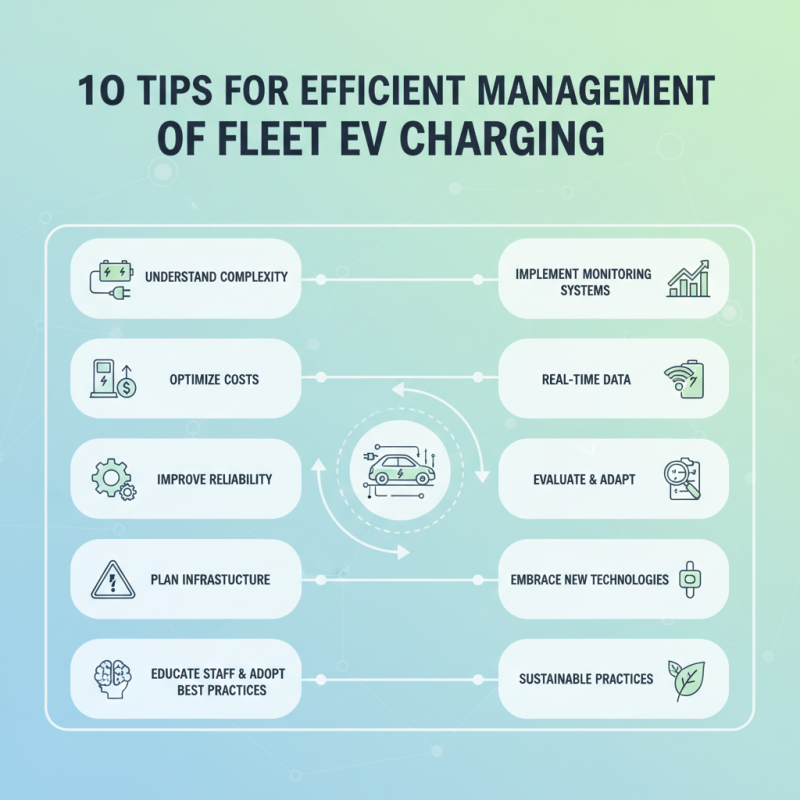
Efficient fleet EV charging management is crucial for businesses transitioning to electric vehicles. Many companies underestimate the complexity involved. A well-managed charging system optimizes operational downtime and reduces costs. It ensures vehicles are ready when needed while minimizing energy expenses.
Understanding charging patterns can enhance performance. Data-driven approaches help managers predict peak charging times. This insight allows for better resource allocation. However, some fleet managers struggle with integrating new technology into existing systems. It's essential to continuously re-evaluate strategies and adapt to changing conditions.
Training staff on the importance of efficient charging management is also vital. Many employees may lack the knowledge to operate charging stations effectively. This gap can lead to wasted resources and inefficiencies. Regular training sessions can mitigate this issue, improving overall fleet performance. The path to efficient fleet management is not straightforward, but commitment and ongoing improvement can lead to significant benefits.
Assessing your fleet's charging needs and infrastructure is crucial for successful electric vehicle (EV) management. Start by evaluating your current fleet size and the types of EVs in use. Consider their daily routes and average mileage. Do your drivers return to a central location? Knowing this helps you determine the needed charging station capacity.
Infrastructure requirements often include location and power supply. Is there adequate space for charging stations? Evaluate if the existing electrical setup can handle increased demand. Charging during non-peak hours can also optimize usage. Assessing the installation cost versus operational savings is essential.
Finally, remember that mistakes can happen. Perhaps a shortage of chargers leads to downtime. Regularly review and adapt your charging strategy to prevent issues. Flexibility is vital as fleet needs evolve. Always plan for future growth while staying realistic about current limitations.
Implementing smart charging solutions is crucial for optimizing fleet EV charging. These solutions enable dynamic adjustments based on real-time energy demand. They help reduce costs and improve sustainability.
One effective tip is to utilize load management systems. They allow fleets to balance energy use across multiple vehicles. This prevents overloading and maximizes charging efficiency. Another strategy involves scheduling charging times during off-peak hours. This lowers expenses and reduces grid stress.
It's also essential to monitor charging patterns. Analyzing data can reveal inefficiencies, such as times when vehicles sit idle. Identifying these moments allows fleets to adjust their strategies. Over time, it could lead to substantial savings. Embracing technology enhances visibility into charging behaviors, ensuring fleets adapt and improve continuously.
| Tip No. | Tip Description | Expected Outcome | Implementation Timeline |
|---|---|---|---|
| 1 | Install Smart Charging Stations | Increased charging efficiency | 1-2 months |
| 2 | Use Renewable Energy Sources | Reduced carbon footprint | Ongoing |
| 3 | Monitor Charging Patterns | Optimized charging schedules | 1 month |
| 4 | Implement Fleet Management Software | Streamlined operations | 2-3 months |
| 5 | Encourage Off-Peak Charging | Cost savings | 1 month |
| 6 | Train Staff on EV Technologies | Enhanced workforce capability | 1-2 months |
| 7 | Invest in High-Capacity Batteries | Extended range for vehicles | 3-6 months |
| 8 | Utilize Data Analytics | Improved decision-making | Ongoing |
| 9 | Schedule Regular Maintenance | Maximized vehicle uptime | Quarterly |
| 10 | Set Charging Goals and KPIs | Enhanced performance tracking | 1 month |
Developing a scheduled charging strategy is crucial for maximizing the performance of electric vehicle (EV) fleets. Optimal charging times not only enhance battery life but also align with energy demand patterns, potentially reducing costs. According to the International Energy Agency, effective charging management can cut operating costs by up to 30%.
One tip for effective charging strategy is to leverage off-peak electricity rates. Many utilities offer lower rates during nighttime hours. Schedule charging primarily during these times to save money. Furthermore, integrating renewable energy sources can provide additional savings. Utilizing solar power during the day can decrease reliance on grid electricity, thus enhancing sustainability.
Another aspect to consider is the use of smart charging technology. This technology adjusts charging based on real-time energy prices and the fleet’s usage patterns. Such systems can optimize charging schedules, ensuring vehicles are ready when needed while minimizing costs. Reports indicate that fleets utilizing smart charging can reduce their energy consumption by 15-20%.
Lastly, regular assessments of charging patterns should be conducted. Fleet managers must analyze usage data continuously. This reflection helps in adjusting strategies to better meet operational needs and adapt to changes in energy markets. Efficient management of fleet EV charging hinges on a proactive and adaptable approach to scheduling.
As the electric vehicle (EV) market expands, efficient charging management becomes crucial. Utilizing data analytics can significantly enhance charging operations for fleets. According to a report by the International Council on Clean Transportation, EVs will make up about 25% of new vehicle sales by 2030. This transition requires fleet operators to analyze charging patterns and optimize their strategies.
Data analytics can identify peak charging times and energy costs. For instance, charging during off-peak hours can save up to 30% in electricity costs. By monitoring real-time usage data, fleets can reduce congestion at charging stations. This practice not only eases the load on the grid but also enhances vehicle availability. However, many fleets still lack the infrastructure to gather or analyze this data effectively, which can lead to increased operational costs.
Some fleets struggle with integrating data systems. They might miss out on valuable trends, leading to inefficient charging practices. An analytics-driven approach needs investment in tools and training. Real-time data must be interpreted accurately for the best outcomes. Careful consideration of these elements is essential to leverage data analytics effectively in EV charging management.
: It optimizes downtime and reduces costs. Vehicles are ready when needed, minimizing energy expenses.
Evaluate fleet size, EV types, daily routes, and mileage. Consider if drivers return to a central location.
Utilize data analytics to identify peak charging times and optimize strategies. This can lead to significant savings.
Integrating new technology and ensuring staff understand charging protocols can be difficult. Training is crucial.
Assess location, power supply, and space for charging stations. Review installation costs against potential savings too.
A shortage of chargers can lead to downtime and wasted resources. Regular strategy reviews are essential.
Fleet needs can change over time, so adapting strategies is crucial. Planning for growth helps address future demands.
Charging during off-peak hours can save up to 30%. Monitoring data helps manage congestion and enhance availability.
Not regularly reviewing plans can lead to resource waste. Continuous improvement is necessary for efficiency.
Staff should learn the operational aspects of charging stations. Regular training sessions can close knowledge gaps.
Effectively managing fleet EV charging is crucial for optimizing operations and reducing costs. To achieve this, organizations must first understand their specific charging needs and infrastructure requirements. Evaluating the size and type of the fleet and the existing charging capability provides a solid foundation for developing a comprehensive charging strategy.
Implementing smart charging solutions is essential for maximizing efficiency, allowing for adaptive power distribution based on demand and availability. A well-structured scheduled charging strategy can enhance performance by ensuring vehicles are charged during off-peak hours, further optimizing energy use. Additionally, leveraging data analytics can provide actionable insights, enabling continuous improvement in charging operations and significant cost reductions. By adopting these practices, businesses can effectively learn how to manage fleet EV charging efficiently, paving the way for sustainable growth in electric vehicle adoption.

Volt Charger