Electric vehicles are moving from early adoption into everyday driving. The International Energy Agency’s Global EV Outlook 2024 reports nearly 14 million electric car sales worldwide in 2023, about 18% of all car sales. Charging demand is growing with them. Pairing chargers with solar can help homes, workplaces, and fleets use more locally generated electricity.
How solar energy can integrate with EV chargers depends on more than placing panels beside a charging point. A rooftop array can feed a home charger during sunny hours, while a solar carport can shade parked vehicles and supply charging power. Smart chargers can shift sessions toward times of stronger solar output. Battery storage can hold some midday generation for evening charging, though added equipment brings cost and complexity. The U.S. Department of Energy describes managed charging as a way to coordinate EV charging with electricity supply and grid needs.
Timing matters. The sun may be strongest while a car is away. This mismatch is easy to overlook. The seven approaches explored here include direct solar charging, smart scheduling, battery storage, solar canopies, load management, workplace charging, and vehicle-to-home power. Their usefulness varies with roof space, local weather, electricity rates, and driving routines. Results also depend on system design; solar power does not guarantee a low-cost charge in every setting. Understanding these trade-offs makes it easier to choose a practical setup, rather than assuming one configuration fits every driver.
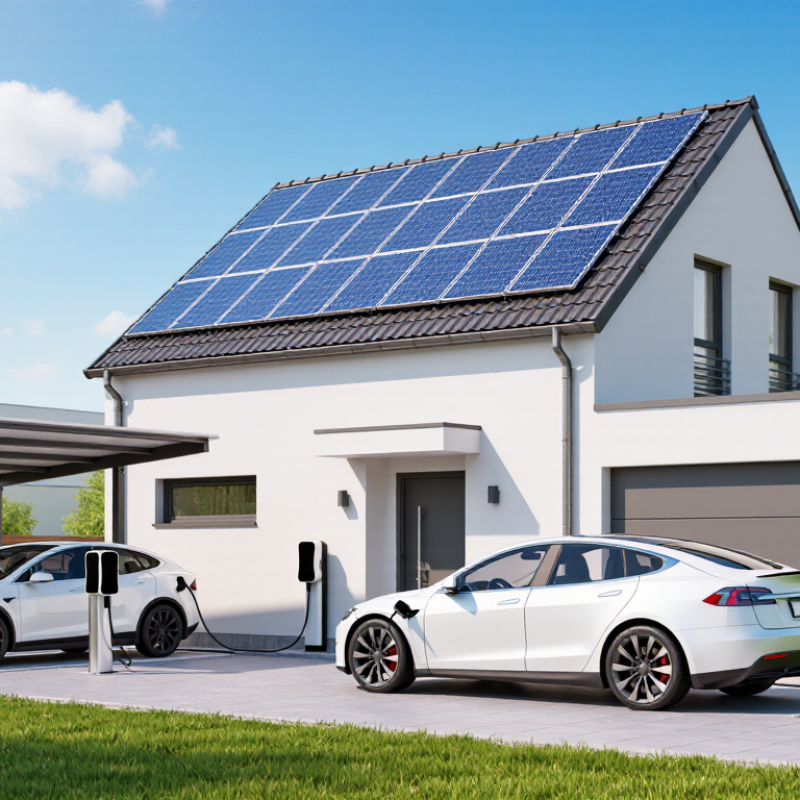
Solar Energy and EV Charging: Core System Components
A solar EV charging system begins with photovoltaic panels that convert sunlight into direct-current electricity. Roof angle, shading, and panel temperature affect real output, so the rated capacity is not a daily guarantee. On a partly cloudy afternoon, production can fall just as a car arrives home.
An inverter converts solar electricity into alternating current for household circuits and most EV chargers. A hybrid inverter may also manage a home battery, though storage adds cost and conversion losses. The EV supply equipment, often called an EVSE, controls charging and communicates with the vehicle. It is not merely a cable. Electrical protection, correctly sized conductors, and a dedicated circuit help keep the installation safe and dependable.
A meter or energy-management controller tracks solar generation, household demand, and charging power. It can direct surplus energy to the vehicle or reduce charging when clouds pass. This coordination matters: a charger drawing more power than the panels produce may use grid electricity without making that obvious. A battery can smooth brief dips, but it cannot fix an undersized solar array. The system also needs settings that fit real routines, such as slower daytime charging when a vehicle sits at home. Some designs look tidy on paper and still disappoint in winter. Check actual usage data before choosing component sizes.
| Integration Method | Core System Components | How It Works | Key Benefit | Important Consideration |
|---|---|---|---|---|
| 1. Charge an EV with on-site solar generation | Solar PV array, inverter, EV supply equipment (EVSE), electrical panel | Solar electricity supplies the building’s electrical loads, including the EV charger, when solar production is available. | Uses locally generated electricity and can reduce electricity drawn from the grid. | Solar output changes with sunlight, weather, season, and system size; charging power may vary if the system is not paired with storage or grid supply. |
| 2. Prioritize surplus solar for charging | PV monitoring, compatible smart EVSE, energy management controller, utility connection | A controller measures household consumption and solar output, then adjusts or schedules EV charging to use electricity that would otherwise be exported. | Can increase on-site use of solar generation. | Export compensation and local utility rules vary. Surplus-based charging depends on real-time measurement and compatible equipment. |
| 3. Coordinate solar with a home battery | PV array, hybrid or battery-compatible inverter, battery, EVSE, control system | Solar can charge the stationary battery; stored energy can later serve household loads or EV charging, subject to system settings and capacity. | Provides more flexibility when solar production and vehicle charging times do not coincide. | Battery energy and power are limited. Conversion losses occur, and the system may prioritize backup or household loads over EV charging. |
| 4. Manage charging around household electrical demand | Smart EVSE, current or power sensors, electrical panel, energy management system | The controller monitors total site demand and can reduce, pause, or schedule charging to stay within configured electrical limits. | Helps coordinate EV charging with appliances and available service capacity. | Charging controls must be configured for the building’s electrical system and applicable electrical codes. |
| 5. Schedule charging for periods of strong solar output | Solar production data, programmable EVSE or vehicle controls, charging schedule | Charging is scheduled for daylight hours when the vehicle is parked and solar generation is expected to be higher. | Can align charging time with typical daytime PV production without requiring a battery. | Actual output is not guaranteed; clouds, shading, season, and vehicle availability affect the amount of solar energy used. |
| 6. Connect through a grid-tied solar system | PV array, grid-connected inverter, utility meter, service panel, EVSE | The home draws from available solar generation and the grid as needed; excess generation may be exported where permitted. | The grid can support charging when solar output is insufficient, without requiring the solar array to match charger demand at every moment. | Interconnection, export limits, tariffs, and metering arrangements depend on the local utility and jurisdiction. |
| 7. Use bidirectional charging where supported | Compatible EV, bidirectional EVSE, approved inverter or power-conversion equipment, control and protection systems | A compatible vehicle may send stored energy back to a home or, under approved arrangements, to the grid. Solar can contribute to charging the vehicle beforehand. | May provide backup power or other energy services when the vehicle and system are designed for that purpose. | Bidirectional operation is not universal. Vehicle, charger, interconnection, protection, and utility requirements must all be compatible. |
Note: System performance depends on solar-array output, EV and charger capabilities, electrical design, utility rules, and local conditions. Equipment should be selected and installed in accordance with applicable codes and manufacturer specifications.
Solar panels generate direct-current electricity. An inverter converts it for household use, and EV charging equipment controls power sent to the car. A meter or controller can track generation, home demand, and charging.
Usually, no. A typical home system uses an inverter and a properly installed EV charger between the panels and vehicle. It is not just a cable.
A steady 5 kW surplus might add about 15–20 miles per hour of charging, before conversion losses. Treat that as an estimate, not a promise.
Roof direction, shading, panel temperature, and clouds all affect output. A partly cloudy afternoon can reduce production just as your car arrives home. Timing matters.
It can favor surplus power and lower charging when clouds pass. If charging demand exceeds solar output, the home may draw electricity from the grid.
A battery can smooth brief dips and store energy for later. It cannot fix an undersized solar array, and storage adds cost and conversion losses.
It works best when the car is parked at home during sunny hours. Daytime charging can use available solar power, while cloudy weeks may still require grid electricity.
Check real household and vehicle usage before choosing. Panel ratings do not guarantee daily output, especially in winter. The neat estimate can feel too optimistic.
How solar energy can integrate with EV chargers depends on coordinating solar panels, an inverter, charging equipment, and, when needed, a home battery or grid connection. During sunny hours, a compatible charging system can direct available solar electricity to an electric vehicle, helping drivers use locally generated power. Because solar production varies with weather and time of day, charging may need to adjust to the amount of energy available and the vehicle’s charging schedule.
A battery can store surplus solar power for later charging, such as in the evening, while a grid connection can supplement solar energy when demand exceeds supply. Smart energy management can balance these sources, prioritize household needs, and adapt charging rates to changing conditions. The same principles apply in homes and public locations: systems can combine solar generation, storage, and grid power to provide practical charging while making better use of renewable electricity. Successful integration depends on matching system capacity with charging needs and available sunlight.

 Volt Charger