Fast charging technology has revolutionized how we use and interact with our devices. In 2026, understanding how fast charging affects battery life is crucial for consumers and manufacturers alike. As smartphones and electric vehicles become more prominent, battery longevity becomes a significant concern. People desire rapid charging solutions but may overlook their impact on overall battery health.
Research shows that frequent fast charging can lead to increased heat, which can degrade battery components over time. Manufacturers are investing in advanced cooling systems to mitigate this issue. However, the trade-offs between convenience and performance must be addressed. Users often find themselves in a cycle of charging their devices rapidly, only to encounter reduced battery lifespan later. This cycle can lead to an urgent need for replacements sooner than expected.
While fast charging represents a leap forward in technology, it is essential to consider its implications. As the demand for faster solutions grows, so does the need for education and awareness. Consumers must weigh the benefits against potential drawbacks to make informed decisions for their battery health. In the end, the balance between speed and longevity is a nuanced discussion that requires ongoing reflection.
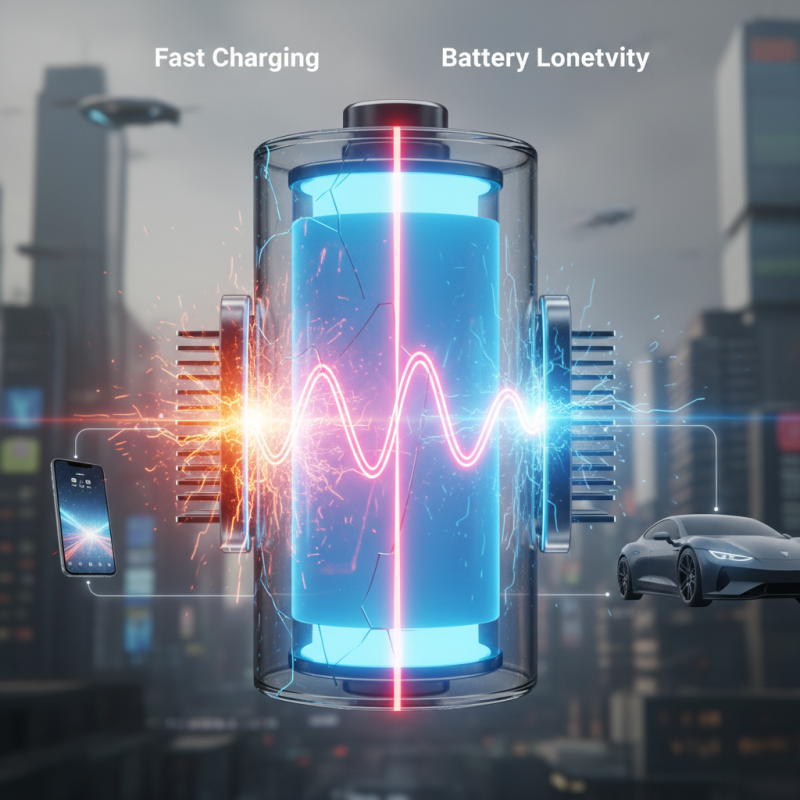
Fast charging technologies have gained significant attention as battery demands increase. This introduces a complex interplay between battery chemistry and charging speed. Fast charging applies higher voltage and current to reduce charging time. While this is convenient, it can stress the battery's chemical composition.
When charging rapidly, lithium-ion batteries experience increased heat. Excess heat can accelerate chemical reactions within the battery. This degradation may lead to a shorter lifespan. Adding to this complexity, frequent fast charging can contribute to capacity loss. The phenomenon often goes unnoticed until the battery's performance declines unexpectedly.
Understanding the impact of fast charging on battery life requires a closer look at battery design. A battery’s internal structure influences how it responds to high charge rates. There are innovations in cooling systems and battery materials aimed at mitigating these effects. However, not all technologies are equally effective. Balancing charging speed with longevity remains a challenge for manufacturers and consumers alike.
: Fast charging can increase heat, potentially damaging battery chemistry over time.
Charging at rates over 1C may lead to quicker capacity loss compared to slower rates.
Charge your device slowly whenever possible to enhance longevity.
Leaving devices plugged in overnight may degrade battery health over time.
High temperatures can reduce performance, so charge in cool places.
Always check charger specifications, as not all chargers are suitable for your device.
This range helps maintain optimal battery health and longevity.
Fast charging may encourage users to charge carelessly, risking battery health.
Poor charging practices can lead to faster battery aging and reduced efficiency.
Users must balance convenience with potential impacts on battery lifespan.
The article titled "How Does Fast Charging Impact Battery Life in 2026?" explores the intricate relationship between fast charging technologies and battery longevity. It delves into how fast charging affects battery life by examining the chemistry of batteries and their cycle life under various charging rates. The analysis reveals that while fast charging can significantly enhance convenience and reduce downtime, it may pose challenges to battery longevity compared to standard charging methods.
Furthermore, the discussion highlights industry standards that govern fast charging efficiency and safety protocols, ensuring users' devices remain protected while benefiting from rapid power replenishment. Looking ahead, the article also considers future trends in fast charging innovations and their potential implications for battery performance, emphasizing the importance of balancing charging speed with battery health for optimal user experience through 2026 and beyond.

 Volt Charger