Understanding electric vehicle charging is crucial for today’s drivers. One key topic is “What is the difference between AC and DC charging?” Renowned electrical engineer and charging solutions expert, Dr. Emily Tran, notes, “The difference can greatly impact charging efficiency and time.” Her insights highlight the importance of this distinction.
AC charging uses alternating current. It’s typically slower and is ideal for home charging. On the other hand, DC charging delivers direct current. This method is faster, making it suitable for public charging stations. Drivers should consider their needs. Some might prefer the convenience of slower overnight charging, while others may need rapid charging during long trips.
Recognizing these differences is essential. It affects vehicle usability and energy consumption. Exploring various charger types can lead to better decision-making. As technology evolves, understanding these fundamentals becomes increasingly valuable. Choosing the right charger is not just about speed; it reflects an understanding of personal requirements. Each driver’s journey begins with the right charging choice.
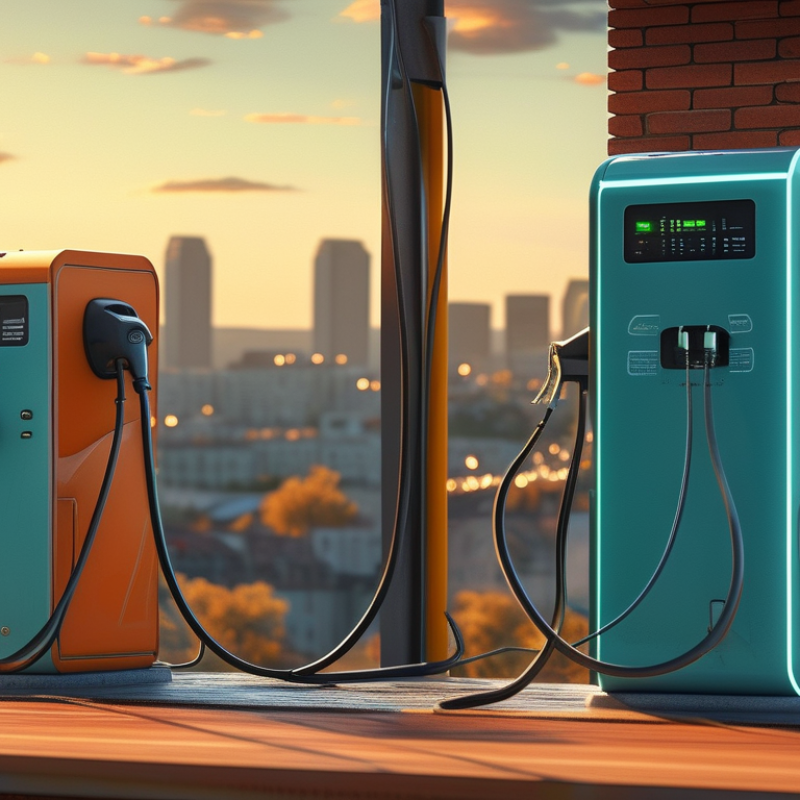
AC charging, or alternating current charging, is a widely used method for electric vehicles (EVs). When it comes to understanding AC charging, it begins with its definition. AC charging brings power from the grid to an EV through a charging station. Unlike DC charging, which provides direct current directly to the vehicle's battery, AC charging requires the vehicle’s onboard charger to convert the AC power into usable DC. This added step can limit the charging speed.
Mechanistically, AC charging operates within specific power levels. Level 1 charging provides around 1.4 kW, while Level 2 charging can deliver up to 19.2 kW. According to the U.S. Department of Energy, Level 2 charging can replenish an EV’s battery at a rate of about 10 to 20 miles of range per hour. It's essential to note that this level of charging is suitable for home installations and public charging stations. However, it does come with certain limitations, such as longer charging times compared to DC fast charging.
Although AC charging is effective, the need for higher-speed charging solutions is apparent. With the proliferation of EVs, enhancing AC charging infrastructure is crucial. Currently, many EV owners report challenges with charging speed and availability. Addressing these issues is key to improving user experience and satisfaction.
When exploring DC charging, many key characteristics stand out. DC charging provides direct current to electric vehicles, allowing for faster charging than traditional AC methods. This direct approach enables vehicles to charge up to 80% in just 30 minutes. For drivers on the go, this speed is crucial. Electric vehicles can recharge quickly during brief stops.
However, the cost of DC chargers can be high. Installation may require significant investment. They are often found in public charging stations rather than residential settings. Not all electric vehicles support DC charging. It is essential to verify compatibility before assuming access to faster rates.
**Tips:** When choosing a charging station, consider your daily travel distance. Find stations that coincide with your usual routes. It's also wise to download apps that map DC charging stations nearby, improving your experience.
DC charging simplifies the process of keeping electric vehicles powered up. It addresses the common concern of range anxiety by providing faster solutions. The trend is growing, but it is not without its limitations. Stay informed about the latest developments in DC charging technologies and infrastructure.
| Characteristic | AC Charging | DC Charging |
|---|---|---|
| Charging Speed | Slower (3-12 hours) | Faster (30 minutes - 1 hour) |
| Power Source | Alternating Current | Direct Current |
| Efficiency | Lower Efficiency | Higher Efficiency |
| Compatibility | Widely Available | Limited Infrastructure |
| Cost | Lower Initial Cost | Higher Initial Cost |
| Charging Station Locations | Common in Public Spaces | Often at Highways or Specialized Areas |
When considering the efficiency of AC versus DC charging, several factors come into play. AC charging typically uses alternating current to power electric vehicles. This method is widely used due to the availability of infrastructure. However, it generally charges more slowly than its counterpart. A standard Level 2 AC charger can take several hours to fully charge an EV.
In contrast, DC charging provides direct current, allowing for much faster charging times. These chargers can replenish an electric vehicle in under an hour. This efficiency stems from higher power levels and reduced energy loss during the conversion process. However, not all vehicles are compatible with DC fast charging, which can hinder its accessibility.
Efficiency metrics also consider energy costs and infrastructure requirements. While DC chargers are faster, they are often more expensive to install and maintain. AC chargers can be more widely deployed, creating an ecosystem of charging stations. Ultimately, the choice between AC and DC charging depends on both user needs and available resources.
AC and DC charging technologies play pivotal roles in the electric vehicle (EV) sector. AC (Alternating Current) charging is commonly used at home and in public charging stations. It's typically slower, often taking hours to replenish a vehicle's battery. According to industry reports, approximately 80% of EV charging occurs through AC sources, making it the most popular method.
On the other hand, DC (Direct Current) charging delivers higher power levels, significantly reducing charging time. DC fast chargers can replenish batteries to 80% in 30 minutes or less. With the increasing demand for quick charging solutions, DC stations are becoming crucial in many urban areas. Some studies indicate that DC charging infrastructure is projected to grow at a CAGR of over 30% between 2023 and 2030.
Tips: When choosing a charging solution, consider your charging habits. If you charge overnight, AC may suffice. If you’re on the go, look for DC options.
It’s important to evaluate your needs. AC charging systems may require a dedicated installation, which could involve added costs. Meanwhile, not all locations have DC charging stations readily available. Always research your local infrastructure.
Charging technologies are rapidly evolving, adapting to the needs of electric vehicle (EV) users. One emerging trend is the development of ultra-fast charging stations. These stations aim to provide a full charge in under 15 minutes. This is a game changer for long-distance travel, as it reduces downtime significantly.
Wireless charging is another trend gaining traction. This technology uses magnetic resonance to transfer energy. It allows users to charge their vehicles without plugging in, enhancing convenience. However, the efficiency and cost-effectiveness of this technology still require improvement. Concerns about energy loss during transfer persist, which limits its practical applications.
Furthermore, battery technology continues to evolve. Solid-state batteries promise higher efficiency and safety than current lithium-ion options. However, manufacturers are still facing challenges in scaling production. The industry must address these hurdles to make solid-state batteries commercially viable. As technologies advance, the focus will increasingly be on balancing speed, efficiency, and sustainability.
C charging?
AC charging requires an onboard charger to convert power, while DC charging delivers direct current to the battery.
Level 1 charging provides around 1.4 kW, while Level 2 can deliver up to 19.2 kW.
Level 2 charging can recharge an EV's battery at about 10 to 20 miles of range per hour.
EV owners often report slow charging speeds and limited availability of charging stations.
DC charging allows vehicles to charge up to 80% in just 30 minutes, making it very convenient.
No, DC charging stations are typically found in public areas and can be expensive to install.
Ultra-fast charging stations aim to provide a full charge in under 15 minutes, which is exciting but not yet widely available.
Wireless charging uses magnetic resonance for energy transfer, allowing vehicles to charge without plugging in.
Solid-state batteries promise safety and efficiency but are still facing production challenges in scaling up.
AC (Alternating Current) and DC (Direct Current) charging are two fundamental methods of delivering electricity to electric vehicles, each with distinct characteristics and applications. Understanding AC charging involves recognizing its definition and mechanism, which typically uses a slower charging rate suitable for residential and commercial locations. In contrast, DC charging offers faster charging capabilities by delivering high voltage directly to the battery, making it ideal for public charging stations and long-distance travel.
What is the difference between AC and DC charging? The key differences lie in their efficiency and usage scenarios. AC charging often involves a multi-phase system that converts electricity for the vehicle, while DC charging bypasses this, allowing for quicker refueling of electric vehicles. Future trends indicate an ongoing evolution in charging technologies, with a growing emphasis on enhancing efficiency and integrating renewable energy sources into both AC and DC charging infrastructures, making them increasingly relevant to the electric vehicle market.

Volt Charger