As electric vehicles (EVs) gain popularity, choosing the right EV charger for home use becomes essential for homeowners. In 2023, the International Energy Agency reported a significant increase in global EV sales, surpassing 10 million units. The demand for efficient charging solutions is at an all-time high. With various types of chargers available, consumers might feel overwhelmed.
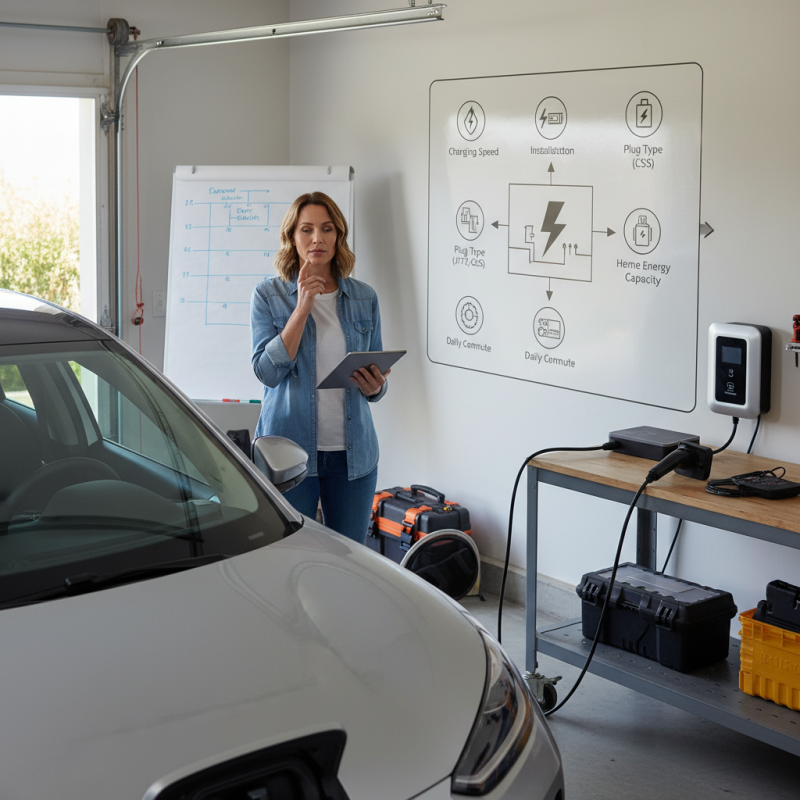
Understanding how to choose the right EV charger for home use involves several factors. Charging speed, plug types, and installation costs are critical considerations. Level 2 chargers are common for home use, providing faster charging times compared to standard outlets. However, installation can be challenging and expensive, and many people overlook this aspect. It's easy to underestimate the complexity of home charging setups.
Moreover, analyzing personal driving habits is vital. Some users may benefit from overnight charging, while others require faster options due to longer commutes. Forgetting to assess these needs could lead to poor choices. Reflecting on available home energy capacity is also crucial as it influences charger selection and usage efficiency. Each detail matters in ensuring the optimal charging experience.
Understanding Different Types of EV Chargers Available for Home Use
When choosing an EV charger for home use, understanding the types available is crucial. There are mainly three types: Level 1, Level 2, and DC Fast Chargers. Level 1 chargers use a standard household outlet. They provide about 4-5 miles of range for each hour of charging. This might suit you if you have a low daily mileage. However, charging can take a long time, sometimes overnight.
Level 2 chargers are more common for home use. They can deliver 10 to 60 miles of range per hour. According to a study by the U.S. Department of Energy, about 80% of EV owners in the U.S. opt for Level 2 chargers at home. These chargers operate on a 240-volt supply, requiring professional installation. It’s an investment. Not all homes may be ready for this upgrade, especially older ones.
DC Fast Chargers are less typical for home scenarios due to cost and installation needs. They provide rapid charging, often getting an EV to 80% in 30 minutes. Yet, these are typically found in commercial settings. Residential users should weigh their charging needs against local electricity rates. Assess your habits and select a charger that aligns with your lifestyle. Reflect on both immediate benefits and long-term implications. Consider future EV capabilities; technology evolves quickly. It’s essential to plan accordingly.
EV Charger Types Comparison
Key Factors to Consider When Choosing an EV Charger for Your Vehicle
When choosing an EV charger for your home, several key factors come into play.
Consider your vehicle's charging capability. Different electric vehicles have varying charging needs.
You must check how fast your car can charge. It’s crucial to match this with the right charger.
A charger that is too slow can be frustrating, and too powerful may be unnecessary.
The installation location is also important. Do you have a garage or a dedicated parking space?
Think about your daily routine. If you charge overnight, slower chargers may suffice.
However, if your schedule is hectic, a faster option may be better.
Look into whether your home’s electrical system can support the charger.
Upgrades could be costly.
Budget is another consideration. Chargers come in various price ranges,
with added features often increasing costs. Evaluate what’s essential for your needs.
Reflect on future needs, too. As technology evolves, you might want a more advanced option later.
Make sure your choice can accommodate that growth, or you may find yourself needing to replace it sooner than expected.
Assessing Your Home's Electrical Capacity for EV Charger Installation
Installing an electric vehicle (EV) charger at home can be exciting. However, understanding your home's electrical capacity is crucial before making a decision. Each charger has different requirements depending on its power level. Knowing your electrical system will help ensure safe and efficient installation.
Tips: Check the main service panel. Is it up to date? A panel that is too old may not handle the extra load. You might need to upgrade it. Another common issue is finding adequate amperage. Most Level 2 chargers require a 40-amp circuit. If you only have a 20-amp circuit, you may need to rethink your setup.
Also, consider the home’s wiring. Inspect it for any signs of wear. If your wiring is outdated, it could pose safety risks. Working with a qualified electrician will help address these issues. They can evaluate the infrastructure and recommend solutions. Sometimes, the installation process might reveal unexpected challenges. Don’t be alarmed if issues arise, as they can often be resolved.
Comparing Charging Speeds: Level 1 vs. Level 2 Chargers Explained
When considering an EV charger for your home, charging speed is a crucial factor. The two main types are Level 1 and Level 2 chargers. Level 1 chargers use a standard 120V outlet. They typically provide about 4-5 miles of range per hour of charging. For urban dwellers with short commutes, this may suffice. However, it can take up to 24 hours for a full charge, which is often impractical for daily use.
Level 2 chargers operate at 240V and can deliver significantly faster charging speeds. They can provide around 25-30 miles of range per hour. According to a study by the U.S. Department of Energy, home users with Level 2 chargers can reduce charging time by up to 80%. This makes them ideal for those who drive longer distances or need to charge their vehicles quickly overnight.
Yet, the installation of Level 2 chargers can be daunting. Electrical upgrades may be necessary, increasing costs and time. Homeowners often overlook this aspect. Assessing your daily mileage is essential. If it’s high, a Level 2 charger is a wise investment. But if your driving habits are light, Level 1 may suffice. Weighing these options can prevent unnecessary expenses and time spent on ideal setups.
Budgeting for Your EV Charger: Costs and Long-term Considerations
When budgeting for your EV charger, it is crucial to consider several factors. The initial cost of the charger itself can vary widely. You might find basic models for a few hundred dollars. Meanwhile, advanced options could reach thousands. Installation is another aspect to account for. It might require electrical upgrades or additional circuitry. This can add to your costs quickly.
Tips for budgeting: Research installation costs in your area. Prices can differ significantly based on location and electrician rates. Don't forget about potential tax incentives or rebates. These can help offset your expenses.
Long-term costs are just as important. Think about electricity usage. Consider the efficiency of the charger. A more efficient model could save you money over time. Maintenance costs should also be factored in. Some chargers may require regular servicing, while others need minimal upkeep. You might overlook how these factors add up. Reflecting on your budget, ensure you choose wisely.
How to Choose the Right EV Charger for Your Home - Budgeting for Your EV Charger: Costs and Long-term Considerations
| Charger Type |
Installation Cost |
Charging Speed |
Connectivity Features |
Long-term Cost |
| Level 1 Charger |
$300 - $600 |
2-5 miles per hour |
Basic (no smart features) |
Low |
| Level 2 Charger |
$600 - $1,200 |
10-25 miles per hour |
Smart features (Wi-Fi, app control) |
Moderate |
| DC Fast Charger |
$10,000 - $40,000 |
60-200 miles per hour |
Advanced (network connectivity) |
High |
FAQS
: Check your vehicle's charging capability and match it with the right charger.
Charging speed varies. A slow charger can be frustrating, while a powerful one might be unnecessary.
Assess your main service panel and wiring. Upgrades may be necessary for safe installation.
Level 1 chargers use a standard 120V outlet, while Level 2 chargers operate at 240V for faster charging.
Faster charging can significantly reduce your wait time, especially for those who drive longer distances.
Unexpected issues can pop up. It's best to consult a qualified electrician for safe and efficient installation.
Overnight charging might work with slower chargers, but a hectic schedule calls for faster options.
Yes, consider future technology and upgrade options to avoid needing replacements soon.
Chargers vary in price. List essential features versus extras, and reflect on potential future needs.
Old wiring can pose safety risks. Inspect it thoroughly and consult with an electrician if needed.
Conclusion
When considering how to choose the right EV charger for home use, it is essential to understand the various types of chargers available, including Level 1 and Level 2 options. Each type offers different charging speeds and capabilities, which can significantly impact your charging experience. Additionally, assessing your home's electrical capacity is crucial, as it determines what upgrades, if necessary, might be required for safe and efficient charger installation.
Key factors to consider include the compatibility with your vehicle and the long-term budget implications of the initial purchase and installation costs. By comparing the charging speeds and considering these factors, you can make a well-informed decision that aligns with your needs, ensuring an optimal charging solution for your electric vehicle at home.

 Volt Charger