China Top 10 EV Chargers What Safety Features Are Required?

Time:2026-09-16 Author:Oliver
0%

China’s EV charging market includes home wall boxes, workplace units, and high-power public chargers. This guide examines ten leading examples through a safety-focused lens. Product rankings can change, but protection principles remain essential.

What safety features are required for EV chargers? Reliable units should provide overcurrent, overvoltage, short-circuit, and overheating protection. They should also monitor ground faults and DC leakage. Residual-current protection can disconnect power when leakage becomes dangerous. Clear status lights, emergency stops, and secure connector locks improve daily operation.

Look closely at the enclosure. A robust charger should resist rain, dust, impact, and heat. Proper grounding matters. So do surge protection and temperature sensors near power components. Communication checks should stop charging when the vehicle or cable reports an abnormal condition. Relevant requirements may involve IEC 61851, IEC 62196, GB/T standards, and local certification rules. Exact obligations depend on the installation region and charger type.

Labels are not enough. Practical testing should include cable strain, repeated plugging, fault simulation, and thermal performance. A charger may look excellent while hiding weak software protection or poor assembly. That is the uncomfortable part. Independent certification, test reports, warranty terms, and technical support deserve equal attention. Users should also confirm whether an electrician installed the unit correctly, because even a safe charger can become hazardous with loose terminals or inadequate grounding. This introduction sets a practical framework for comparing China’s top ten EV chargers without treating marketing claims as final evidence.
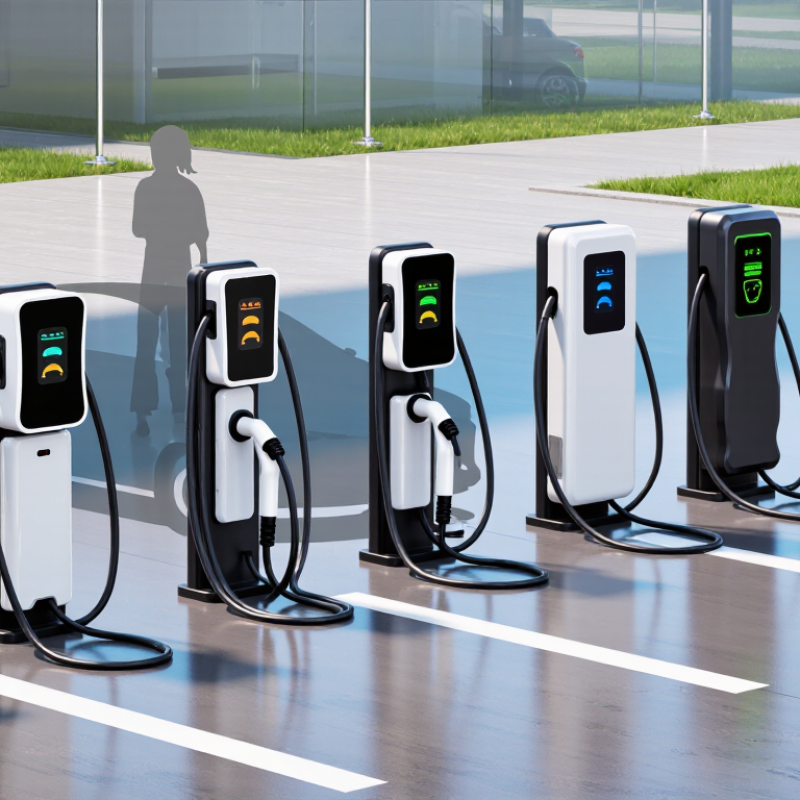
China Top 10 EV Chargers What Safety Features Are Required?

What Defines a Safe EV Charger in China?

A safe EV charger in China begins with verified compliance, not a glossy enclosure. It should meet applicable Chinese GB standards and carry the required conformity certification for its installation category. The label should show electrical ratings, manufacturer details, and clear operating limits. Missing information is a warning sign.

Inside the charger, several protections must work together. Residual-current detection can interrupt power when leakage threatens users. Overcurrent, short-circuit, overvoltage, and overheating protection reduce fire and equipment risks. Temperature sensors should monitor the plug, cable, and power terminals, especially during humid summer charging. Surge protection matters near open parking areas. Reliable grounding matters everywhere. The connector should lock correctly and communicate with the vehicle before high current flows.

Installation quality is equally important. I would inspect cable size, terminal tightness, waterproof sealing, and the condition of the distribution cabinet. An outdoor unit should resist rain, dust, impact, and ultraviolet exposure according to its rated enclosure class. An emergency stop should be easy to reach, not hidden behind a vehicle.

Small failures can reveal bigger weaknesses. A charger may pass a factory test yet develop loose terminals after months of vibration. Nuisance shutdowns may protect the system, but users sometimes bypass them or ignore warning lights. Regular inspection, software fault records, and trained maintenance staff help turn safety features into dependable protection.

Core Electrical Protection Features for EV Chargers

China Top 10 EV Chargers: What Safety Features Are Required?

Core electrical protection starts with reliable grounding and continuous monitoring. In field inspections, a loose protective conductor has caused more concern than a damaged cable. The charger should detect earth leakage and disconnect power quickly when current escapes its intended path. Residual-current protection is essential, especially where moisture may reach outdoor equipment. Some installations also need direct-current leakage detection, depending on the charging system and local requirements.

Overcurrent protection prevents damaged conductors and overheated terminals. Short-circuit protection must react rapidly, while thermal sensors should monitor contactors, terminals, and internal power modules. Surge protection helps reduce damage from lightning or unstable utility networks. A clear isolation device allows technicians to make the equipment electrically safe before maintenance. Chargers should also prevent energizing the connector before a secure vehicle connection is confirmed. Standards such as IEC 61851 and IEC 60364-7-722 provide useful technical references, but local electrical rules still control installation decisions.

Tips: Check grounding resistance, leakage protection, cable temperature, and connector locking during commissioning. Test under realistic load conditions, not only at standby. Keep inspection records with dates and measured values. Do not ignore small warning signs. A warm terminal may indicate poor tightening, overload, or aging insulation. No design is perfect. Periodic testing remains necessary, because weather, dust, vibration, and repeated plugging can weaken protection over time.

China Top 10 EV Chargers What Safety Features Are Required? - Core Electrical Protection Features for EV Chargers

Key safety functions commonly required or expected for conductive electric vehicle charging equipment

No. Safety Feature Protection Function Typical Technical Requirement Relevant Standard or Reference Importance
1 Overcurrent Protection Disconnects or limits current when a short circuit, overload, or abnormal load condition occurs, helping protect conductors, connectors, and power electronics. Use correctly rated circuit breakers, fuses, or electronic protection. The protective device should be coordinated with the charger's continuous current and installation wiring. IEC 60364-7-722; IEC 61851; NEC Article 625 Essential
2 Residual-Current Protection Detects leakage current to earth and disconnects the supply to reduce electric-shock and fire risks. AC charging installations generally require an appropriate residual-current device. Where DC residual current can occur, the system needs DC-sensitive protection or an approved 6 mA DC detection function combined with suitable AC protection. IEC 60364-7-722; IEC 62955; IEC 61851 Essential
3 Protective Earthing and Ground-Fault Monitoring Provides a low-impedance fault path and detects loss or abnormal conditions in the protective earth connection before or during charging. Charging should be prevented or stopped if the protective earth is missing, disconnected, or outside the permitted monitoring range. IEC 61851; IEC 60364-7-722; UL 2231 Essential
4 Insulation Monitoring Checks insulation resistance between live conductors and earth, particularly in isolated or high-voltage DC charging systems. The charger should identify insulation deterioration and inhibit or interrupt charging when the measured value falls below the applicable safety threshold. IEC 61851-23; IEC 61557-8 Essential
5 Overvoltage and Undervoltage Protection Protects the vehicle, charger, and connected electrical installation from abnormal supply voltage. Charging should be reduced or stopped when voltage moves outside the equipment's specified operating range. Surge protection should be selected according to the installation's risk assessment. IEC 61851; IEC 60364-4-44; IEC 61643-11 Required
6 Overtemperature Protection Prevents overheating of power modules, terminals, cables, plugs, and battery interfaces. Temperature sensors and control logic should reduce output or stop charging when internal components or connection points exceed their permitted temperature. IEC 61851; IEC 62196; applicable product safety requirements Essential
7 Control-Pilot and Proximity Detection Confirms the connection state, communicates allowable current, and helps prevent energization before a valid vehicle connection is established. The connector should remain de-energized until the required charging sequence is completed. The system should stop or inhibit output if the plug is removed or the control signal becomes invalid. IEC 61851-1; IEC 62196-2; SAE J1772 where applicable Essential
8 Contactor Welding Detection Identifies whether an internal switching contactor has remained closed when it should be open, preventing unexpected voltage at the connector. Use feedback or voltage verification to detect welded contacts and lock out further charging until the fault is cleared. IEC 61851; IEC 60947-4-1; applicable EVSE safety requirements Required
9 Surge and Transient Protection Reduces damage caused by switching transients and lightning-related surges entering through the electrical supply. Install appropriately rated surge protective devices, with correct earthing, coordination, and backup overcurrent protection for the installation. IEC 60364-4-44; IEC 61643-11; IEC 62305 Recommended
10 Enclosure, Ingress, and Mechanical Protection Protects users and electrical parts from contact with hazardous live components, dust, water, impact, and environmental contamination. Choose an enclosure rating and impact resistance suitable for the installation location. Outdoor equipment commonly requires an appropriate IP rating, UV resistance, corrosion protection, and cable strain relief. IEC 60529; IEC 61851; IEC 62262; IEC 61439 where applicable Essential

Note: Exact protection requirements depend on charger type, output power, electrical system, installation location, and the regulations applicable in the target market. Product standards and local electrical codes should be reviewed together by a qualified designer or installer.

Smart Safety Systems for Charging Control and Monitoring

China Top 10 EV Chargers: What Safety Features Are Required?
Smart Safety Systems for Charging Control and Monitoring

As electric vehicle charging expands in China, safety depends on more than charging speed. A reliable charger watches every electrical change.

Real-time sensors track voltage, current, temperature, and insulation resistance. If values move beyond safe limits, the controller reduces power or stops charging. Residual-current protection helps detect leakage before it becomes dangerous. Overcurrent and overvoltage protection guard cables, batteries, and internal components. Thermal sensors should monitor connectors, relays, and power modules, especially during summer charging. Heat can build quietly.

Smart communication adds another safety layer. The charger should exchange status signals with the vehicle before delivering full power. It can verify connection, confirm grounding, and prevent energizing an open plug. Remote monitoring should send alerts for abnormal temperature, repeated faults, water exposure, or unauthorized access. Clear event logs help technicians identify patterns instead of guessing. An emergency stop must remain easy to find.

Good systems also support automatic load balancing. This reduces stress when many vehicles charge together. Secure software updates and controlled user permissions matter too. However, smart protection is not perfect. Sensors can drift, networks can fail, and people may ignore warnings. Regular inspection, tested shutdown functions, and qualified installation remain essential. A charger should fail safely, even when communication disappears.

EV Charger Safety Features: IEC 61851 Control Pilot States

The control-pilot signal is a core safety mechanism in conductive EV charging. Its nominal positive-voltage states identify whether the charger is available, a vehicle is connected, charging is permitted, ventilation is required, or a fault condition exists. A compliant smart charger should combine this signaling with residual-current protection, overcurrent and overtemperature monitoring, protective-earthing verification, emergency shutdown, and continuous communication supervision.

Installation, Weatherproofing, and User Protection Standards

China Top 10 EV Chargers: What Safety Features Are Required?

Safe EV charging begins with correct installation, not attractive design. The International Energy Agency reported over 14 million new electric cars globally in 2023. This growth increases pressure on household and public charging systems. Qualified electricians should verify cable size, circuit capacity, grounding, and residual-current protection. IEC 61851 recommends control systems that monitor charging communication and disconnect power during faults. A charger should also resist overheating near terminals and cable connections.

Weatherproofing matters in China’s humid summers, coastal regions, and freezing northern winters. An IP54 enclosure offers protection against dust and splashing water, while higher ratings provide stronger resistance. However, an IP rating does not protect a damaged seal or poorly fitted cable. The National Electrical Manufacturers Association warns that outdoor equipment needs suitable enclosures and regular inspection. Installers should keep connectors off wet ground and provide drainage beneath wall-mounted units. Small mistakes can become expensive.

Tips:

Check the safety label, certification documents, and installation record before purchase. Look for overcurrent, overvoltage, leakage, short-circuit, and temperature protection. User protection also requires secure cable storage, clear status lights, emergency shutdown access, and child-safe placement. The U.S. National Renewable Energy Laboratory has highlighted connector handling and user interface design as practical safety concerns. In real installations, users may ignore warnings when screens are confusing. That weakness deserves attention. Safety instructions should remain readable after dust, rain, and repeated use.

How to Evaluate Safety Features Across China’s Top 10 EV Chargers

Evaluating China’s top 10 EV chargers requires more than comparing charging speed and price. Safety evidence matters more. I would inspect each unit’s protection system, test records, and installation guidance before trusting its specifications.

Look for overcurrent, overvoltage, short-circuit, and residual-current protection.

Thermal sensors should detect rising heat near connectors and internal power modules. A clear emergency-stop button is essential in public locations. The charger should also provide reliable grounding, insulation monitoring, surge protection, and automatic power isolation after a serious fault. Check the enclosure rating, cable temperature limits, and resistance to rain, dust, and impact. Small details matter.

During evaluation, compare certification documents with the exact model number, not a similar product family. Review fault logs and ask how quickly the charger disconnects during abnormal conditions.

Test the connector lock, screen warnings, and restart procedure. A safe charger should recover carefully, not simply resume power without inspection. Communication between the vehicle and charger also needs stable fault detection.

I would not rely on a bright display.

My own checklist can miss installation quality, which often changes real-world risk. A well-designed charger may still become unsafe through loose terminals, poor ventilation, or damaged cables. Independent testing, qualified installation, scheduled maintenance, and clear user instructions provide stronger evidence than marketing claims. Observe the unit after repeated charging sessions. Heat, noise, or repeated error messages deserve investigation.

FAQS

What makes an EV charger safe in China?

It should meet applicable Chinese GB standards and hold required conformity certification. The label must show ratings, manufacturer details, and operating limits. Missing information is a warning sign.

Which electrical protections should a charger include?

Essential protections include residual-current, overcurrent, short-circuit, overvoltage, and overheating protection. These systems reduce electric shock, fire, and equipment risks. One protection is not enough.

Why are temperature sensors important during charging?

Sensors should monitor the plug, cable, terminals, relays, and power modules. Heat may build quietly during humid summer charging. Early shutdown can prevent damage.

How should a charger communicate with an electric vehicle?

The charger should confirm connection and grounding before delivering high current. It must prevent power from reaching an open or poorly connected plug. A secure connector lock matters.

What should installers check before outdoor operation?

They should inspect cable size, terminal tightness, waterproof sealing, and the distribution cabinet. Outdoor enclosures should resist rain, dust, impact, and ultraviolet exposure. The emergency stop must remain easy to reach.

Can smart monitoring improve charging safety?

Real-time sensors can track voltage, current, temperature, and insulation resistance. The controller may reduce power or stop charging when readings become unsafe. Useful, but not perfect.

What should remote monitoring report?

It should send alerts for abnormal temperature, repeated faults, water exposure, and unauthorized access. Clear event logs help technicians identify repeated patterns. Guessing is unreliable.

Does automatic load balancing protect multiple chargers?

It can reduce electrical stress when several vehicles charge simultaneously. However, networks can fail and sensors can drift. The charger should fail safely.

How often should an EV charger be inspected?

Regular inspection should check loose terminals, warning lights, shutdown functions, and software fault records. Vibration may loosen connections after months of operation. Ignoring small faults is risky.

Conclusion

A safe EV charger in China is defined by more than charging speed or convenience. It should combine reliable construction, stable power delivery, and layered protection for people, vehicles, and electrical systems. What safety features are required for EV chargers? Essential safeguards include overvoltage, overcurrent, short-circuit, overheating, and leakage protection, along with automatic power interruption when abnormal conditions are detected. Clear status indicators and secure communication also help users understand whether charging is operating normally.

Smart safety systems can continuously monitor temperature, current, voltage, insulation, and charging status, while software controls can stop or reduce power when risks appear. Safe installation is equally important: chargers should be properly grounded, protected against dust, water, impact, and outdoor weather, and installed with suitable cables and connectors. User-focused features such as emergency stop controls, access management, cable protection, and fault alerts further improve safety. When evaluating China’s top 10 EV chargers, compare these electrical, intelligent, environmental, and user-protection features rather than focusing only on price, charging speed, or appearance.

Oliver

Oliver

Oliver is a seasoned marketing professional with a wealth of expertise in driving brand awareness and engagement. With a deep understanding of our company's product offerings, he consistently delivers high-quality content that enriches our professional blog. His insights not only shed light on......