Top EV Charging Apps for Monitoring Charging Sessions

Time:2026-10-01 Author:Henry
0%

Choosing the right app can turn a confusing charging stop into a clear, measurable routine. This guide explores the top EV charging apps for monitoring charging sessions, from home charging dashboards to public-network platforms. It focuses on practical details, including live battery progress, charging speed, session duration, energy consumption, payment records, and unexpected interruptions.

For drivers searching “How to monitor EV charging sessions via apps,” reliable data matters more than attractive screens. Tom Moloughney, an EV charging specialist and host of State of Charge, has said, “The best charging experience is one you barely notice.” That idea remains useful. A good app should show the charger’s current status without forcing drivers to refresh repeatedly. It should also send alerts when charging stops, reaches a selected limit, or encounters an error.

Small details matter.

A useful app can reveal whether a vehicle is receiving 7 kW or only 2 kW beside the garage wall. It may display the session’s start time, estimated cost, and delivered energy in kilowatt-hours. These records help drivers compare charging locations and identify recurring problems. Still, app data is not always perfect. Network delays, vehicle software limits, and inaccurate charger information can create misleading readings. Users should check the car’s dashboard and the charger itself when results seem unusual. This article evaluates leading apps through that practical lens, considering accuracy, usability, compatibility, privacy, and the confidence each platform earns over repeated charging sessions.
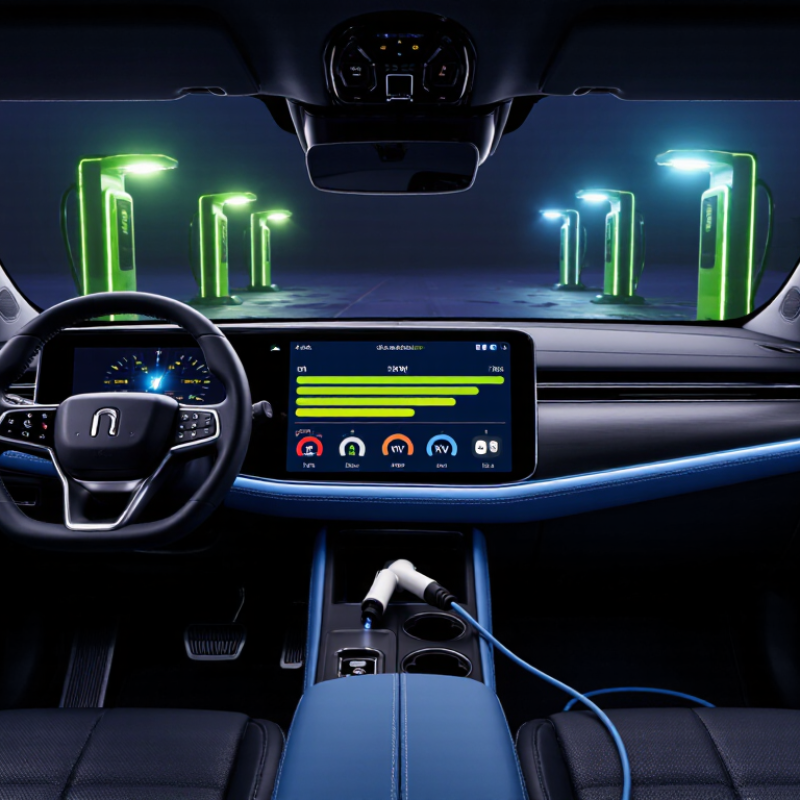
Top EV Charging Apps for Monitoring Charging Sessions

Defining EV Charging Monitoring Apps: 17 Million EV Sales in 2024 (IEA)

Top EV Charging Apps for Monitoring Charging Sessions

Defining EV Charging Monitoring Apps: 17 Million EV Sales in 2024 (IEA)

Electric vehicle ownership is expanding quickly. The International Energy Agency’s Global EV Outlook 2025 reports more than 17 million electric cars were sold worldwide in 2024. This growth makes charging visibility increasingly practical, not optional. An EV charging monitoring app tracks an active session, delivered energy, charging speed, estimated cost, and completion time. Some tools also show battery state and charging history. However, data accuracy depends on vehicle software, charger communication, and local electricity tariffs.

Useful monitoring begins at the parking space. A driver can check whether charging started, confirm power delivery, and receive an alert before the battery reaches its limit. The IEA also reports more than five million public charging points globally in 2024. That network is large, but the experience remains uneven. A screen may show a session as active while the connector delivers very little power. I have found that simple readings, such as kilowatt-hours and elapsed time, often reveal more than crowded dashboards. Costs can still be misleading when tariffs include parking fees, taxes, or demand charges. The U.S. Department of Energy notes that charging rates vary by equipment and operating conditions, so app estimates should be treated as guidance, not a final invoice. Small errors matter. Reliable apps explain their data sources and show when readings were last updated.

How Charging Apps Track Sessions Across 4 Million Public Points (IEA)

Public charging apps now operate across a vast and changing network. The International Energy Agency reported more than 4 million publicly accessible charging points worldwide in its Global EV Outlook 2024. That figure refers to connectors, not always separate stations. One location may display several charging options.

During a charging session, an app can receive the connector ID, start time, charging status, delivered energy, and stop time. It may also show live availability and estimated costs. These records often travel through charging networks and roaming systems. The process resembles a digital receipt built while the vehicle remains parked.

The data is useful, but not perfect. A disconnected station can appear available for several minutes. A delayed meter reading can make energy use look incomplete. The IEA also notes that public charging deployment is expanding rapidly, increasing the need for reliable infrastructure data. Research from the U.S. Department of Energy highlights similar concerns around station availability and connector performance in public networks. Small errors matter. They can change route planning, payment records, and driver confidence.

For practical monitoring, users should compare the app’s session clock with the vehicle display. Check the reported energy after unplugging. Keep a screenshot when a session ends unexpectedly. That habit feels excessive, but charging records sometimes disagree across systems. Improvements are still needed in data freshness, pricing transparency, and cross-network accuracy.

Comparing Live Status, Energy, Cost, and History Tracking Features

Choosing an EV charging app starts with live status, not attractive maps. A useful dashboard shows whether a connector is available, occupied, delivering power, or interrupted. The International Energy Agency reported more than four million public charging points worldwide at the end of 2023. That scale makes real-time accuracy difficult, especially when station data updates slowly.

Energy tracking should display delivered kilowatt-hours, charging duration, and power changes during a session. These details help drivers notice a weak connection or an unexpected drop in speed. The U.S. Department of Energy’s Alternative Fuels Data Center highlights pricing differences across charging locations and electricity rates. Cost tools therefore need to separate energy charges, session fees, parking fees, and taxes. They should also show the calculation clearly. Hidden assumptions reduce trust.

History features turn scattered sessions into useful evidence. Weekly energy totals, average cost per kilowatt-hour, and charging time can reveal patterns at home, work, or public stations. IEA analysis shows that charging demand is growing with electric vehicle adoption, so simple records will become more valuable for planning. Still, app history is not perfect. A failed synchronization can distort monthly totals. I keep payment records too. Small gaps remain. Exportable data, timestamps, and downloadable receipts make the record easier to verify, compare, and correct.

Top EV Charging Apps for Monitoring Charging Sessions - Comparing Live Status, Energy, Cost, and History Tracking Features
App Category Typical Monitoring Scope Live Session Status Energy Tracking Cost Tracking History Tracking Important Data Limitations
Public Charging Network Apps Designed for sessions at chargers operated by one public charging network, including charger availability, connector status, session controls, and payment activity. High Usually shows energy delivered during the active session when the charger reports meter data. Commonly displays an estimated or final session charge based on energy, time, connection fees, or applicable tariffs. Usually includes completed sessions, dates, locations, duration, and payment records. Information may be delayed if the charger has weak connectivity. Pricing can change by location, time, membership, or parking rules.
Vehicle Manufacturer Apps Primarily monitors the vehicle itself, including charging state, battery percentage, estimated range, charging limits, and scheduled charging. High Often provides battery percentage and charging progress; exact kilowatt-hours may not be available for every vehicle or session. Usually limited unless home electricity rates, public charging receipts, or tariff data are configured separately. May show recent charging events, but detailed session archives and downloadable records vary by vehicle system. Vehicle-reported battery data can differ from energy measured by a wall charger because of charging losses and auxiliary vehicle loads.
Home Charger Apps Focused on residential charging equipment, with controls for start and stop actions, schedules, current limits, load management, and household usage. High Frequently provides session-level kilowatt-hours and, on compatible equipment, charging power over time. Can estimate charging cost when electricity rates, time-of-use periods, taxes, or renewable-energy settings are entered correctly. Commonly stores daily, weekly, monthly, and session-based energy records; export options depend on the software. Cost accuracy depends on the quality of the tariff configuration and whether fixed charges or demand charges are included.
Multi-Network Roaming Apps Combines access to multiple public charging networks with location search, route planning, roaming authorization, and consolidated account activity. Medium May display energy delivered, but the level of detail depends on the connected network and charger data exchange. Often shows an estimated price or roaming rate before charging; the final amount may be supplied after the session ends. Typically records sessions paid through the roaming account, while sessions paid directly elsewhere may be absent. Live availability and pricing can be less consistent across networks because data is imported through external system connections.
Smart Charging Management Apps Optimizes charging around electricity prices, grid demand, solar generation, battery targets, or scheduled departure times. High Often tracks charging power, accumulated energy, charging intervals, and energy shifted to lower-cost periods. Can estimate savings and charging cost when real-time or time-of-use electricity prices are available. Usually offers charts for energy use, charging schedules, price periods, and optimization results. Automated schedules may be interrupted by vehicle sleep behavior, communication failures, charger limits, or utility-rate changes.
Fleet Charging Dashboards Monitors multiple vehicles or charging points, with driver assignment, utilization reports, energy allocation, and operational alerts. High Commonly provides charger-level and vehicle-level energy totals, often with date, site, and asset filters. Can support cost allocation using tariffs, site expenses, vehicle records, or department charging rules. Usually provides detailed long-term reports that can be filtered and exported for accounting or fleet analysis. Accuracy depends on consistent vehicle identification, synchronized charger clocks, complete meter data, and correct tariff setup.
Open EV Data and Utility Apps May combine charging information with electricity consumption, utility pricing, home energy production, or broader energy-management data. Variable Can provide detailed energy trends when the charger, vehicle, and utility meter are connected to the same platform. Potentially detailed, but accuracy varies according to the available tariff, meter data, taxes, and fixed-cost treatment. Often supports longer-term trend analysis, though session-level detail may be less complete than in dedicated charger apps. Data may be aggregated at household level, making it difficult to separate vehicle charging from other electricity consumption.
Reading guide: “High” indicates that the feature is commonly available within the category, while “Medium” or “Variable” indicates greater dependence on charger compatibility, network integration, vehicle support, regional tariffs, and user settings.

Evaluating Network Coverage, OCPP Support, and Roaming Compatibility

Top EV Charging Apps for Monitoring Charging Sessions

Network coverage is more than a map filled with charging icons. In real use, an app should show connector status, operating hours, pricing, and recent availability. The International Energy Agency reported over four million public charging points worldwide in 2023, with deployment rising by more than 40% year on year. That growth creates choice, but not always clarity. During a roadside test, a station may appear available while its cable is occupied, reserved, or offline. Small details matter.

Look for clear roaming information. An app should identify whether your account can start a session outside its home network, display roaming fees, and provide a reliable digital receipt. Open Charge Point Protocol support also deserves attention. OCPP 1.6 remains widely deployed, while OCPP 2.0.1 adds stronger device management, monitoring, and security capabilities, according to the Open Charge Alliance specifications. However, OCPP support does not automatically guarantee seamless roaming. The app, charger operator, and mobility provider must exchange compatible data.

Test before trusting it.

A practical review should compare session start times, live power readings, interruption alerts, and final energy totals. The app should also explain errors in plain language. Some do not. That weakness can turn a five-minute stop into a frustrating delay. The European Alternative Fuels Observatory continues to track charging infrastructure expansion across Europe, yet public statistics cannot reveal every failed authorization or inaccurate status update. Personal testing still exposes the gaps. A dependable app earns confidence through consistent session records, not attractive coverage claims.

Choosing Apps for Home, Workplace, and Public Charging Needs

Choosing the right EV charging app depends on where charging happens most often: home, work, or public stations.

For home charging, select an app that shows live power flow, charging duration, and estimated energy cost. A useful dashboard can reveal an unusual overnight spike or a delayed start. The International Energy Agency’s Global EV Outlook 2024 reported more than 14 million electric cars sold globally in 2023. That growth makes accurate household monitoring increasingly important. However, energy estimates can be imperfect. Utility rates, weather, and battery temperature may change the final cost.

Workplace charging requires shared visibility. Look for session history, charging completion alerts, and clear access records. These features help employees avoid occupying a connector after charging ends. The U.S. Department of Energy’s Alternative Fuels Data Center identifies workplace charging as an important option for drivers without dependable home access. Still, workplace data may update slowly. Do not treat every notification as immediate.

Public charging demands stronger location and reliability tools. Prioritize live connector status, route planning, payment transparency, and outage reporting. The IEA reported that the global public charging network exceeded four million charging points in 2023. More chargers do not guarantee a smooth session. A station may appear available but fail during authentication. Apps should be judged by accuracy, not attractive maps. Test one during a short trip before depending on it for a longer journey.

Top EV Charging Apps for Monitoring Charging Sessions

Typical charging-session metrics for choosing monitoring features across home, workplace, and public charging needs.

Home sessions generally last longer because vehicles charge during overnight periods, while public DC fast-charging sessions are shorter but deliver more energy per minute. Apps should therefore provide live status, estimated completion time, energy delivered, cost tracking, and notifications suited to each charging context.

FAQS

What information can a charging app track during a session?

It can record the connector ID, start time, charging status, energy delivered, and stop time. It may also show live availability and estimated cost.

Why might a charger appear available when it is not?

Station data can update slowly. A disconnected charger may look available for several minutes. A cable might also be occupied, reserved, or offline.

How accurate are charging session records?

They are useful, but not flawless. Delayed meter readings or failed synchronization can create incomplete energy totals and incorrect monthly records.

What should a live charging dashboard display?

It should show whether a connector is available, occupied, delivering power, or interrupted. Operating hours, prices, and recent availability are helpful too.

How should an app explain charging costs?

It should separate energy charges, session fees, parking fees, and taxes. The calculation should be visible. Hidden assumptions weaken trust.

Why is energy tracking important during charging?

Delivered kilowatt-hours, charging duration, and power changes can reveal weak connections or sudden speed drops. A five-minute stop may not deliver expected energy.

Can one app work across different charging networks?

Sometimes. Roaming depends on compatible data exchange between the app, charger operator, and mobility provider. Support is not automatic.

Does protocol support guarantee smooth charging sessions?

No. A supported charging protocol can improve monitoring and device management. It does not guarantee accurate status, pricing, or roaming.

How can drivers check whether an app’s records are reliable?

Compare the app’s session clock with the vehicle display. Check energy after unplugging. Keep a screenshot when charging ends unexpectedly.

What features make charging history more useful?

Weekly energy totals, average cost per kilowatt-hour, timestamps, downloadable receipts, and exportable data help reveal patterns and correct mistakes. Small gaps remain.

Conclusion

EV charging monitoring apps help drivers understand what happens before, during, and after a charging session. With global EV sales reaching 17 million in 2024 and public charging expanding across roughly 4 million points, these tools are becoming essential for managing energy use and charging access. The best apps display live charger status, session progress, delivered energy, estimated completion time, charging costs, and historical records, allowing users to make better decisions and identify unusual activity.

When comparing options, users should look beyond basic tracking features. Network coverage, roaming compatibility, and support for the Open Charge Point Protocol can affect whether an app works reliably across different locations and charging providers. How to monitor EV charging sessions via apps depends on the charging environment: home users may prioritize energy history and cost estimates, workplace users may need scheduling and usage reports, while public-charging users often require real-time availability, navigation, payment visibility, and cross-network access. Choosing an app that matches these needs can make charging more predictable and efficient.

Henry

Henry

Henry is a dedicated marketing professional with a profound expertise in the company's offerings. With years of experience in the industry, he possesses an impressive understanding of the market dynamics and consumer behaviors that drive success. Henry is committed to sharing his insights through......